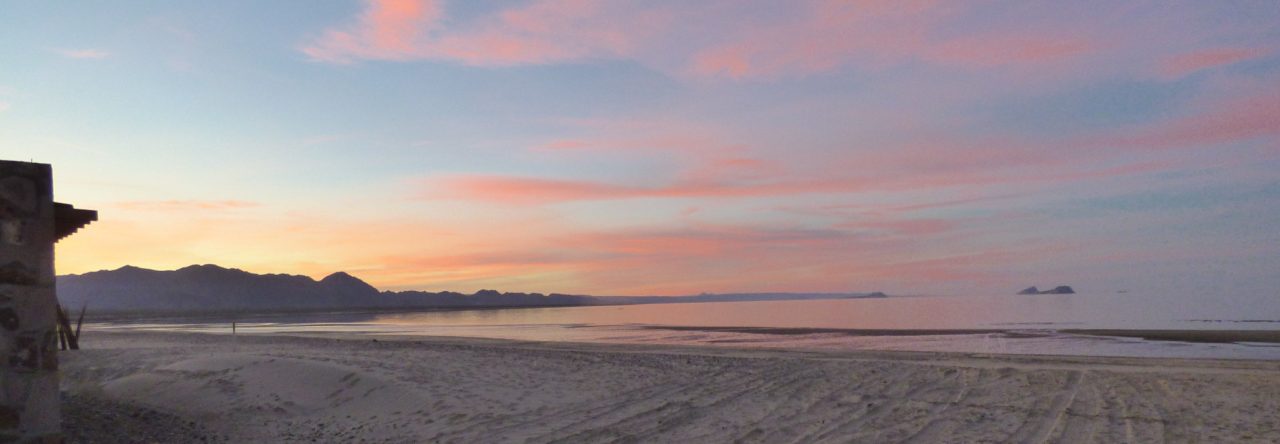
We left Swakopmund bound for Etosha National Park, by way of Brandberg Mountain.
“Brandberg” means burning mountain, a reference to the appearance of the black rocks early in the morning at sunrise, when appear to be on fire.
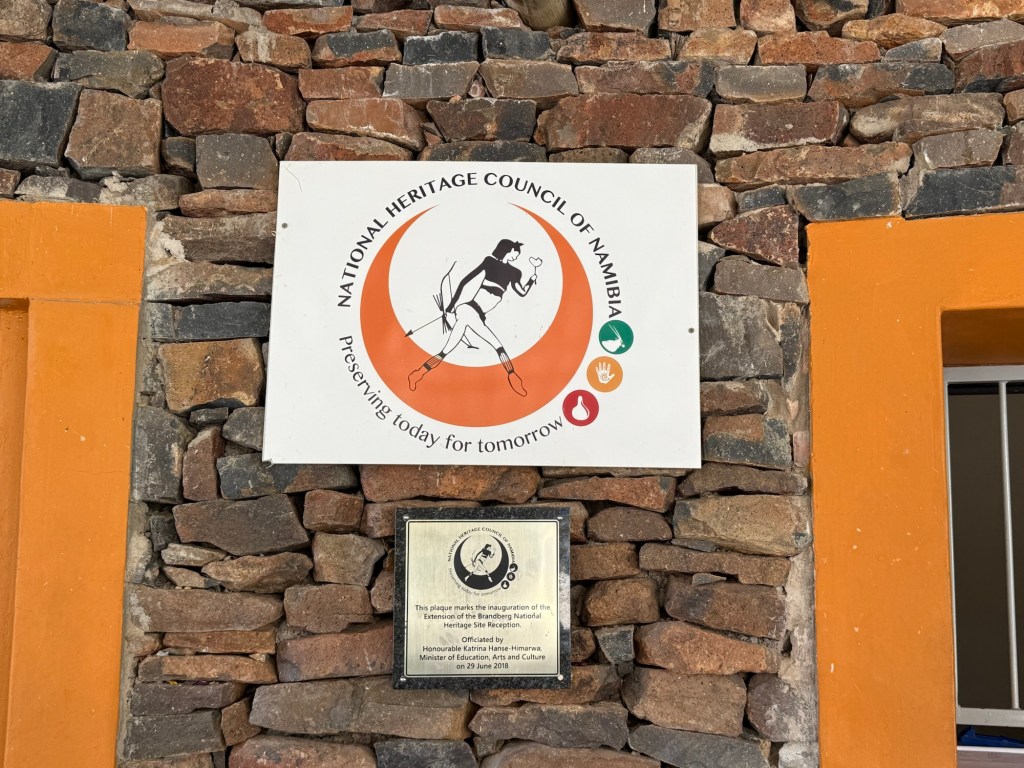
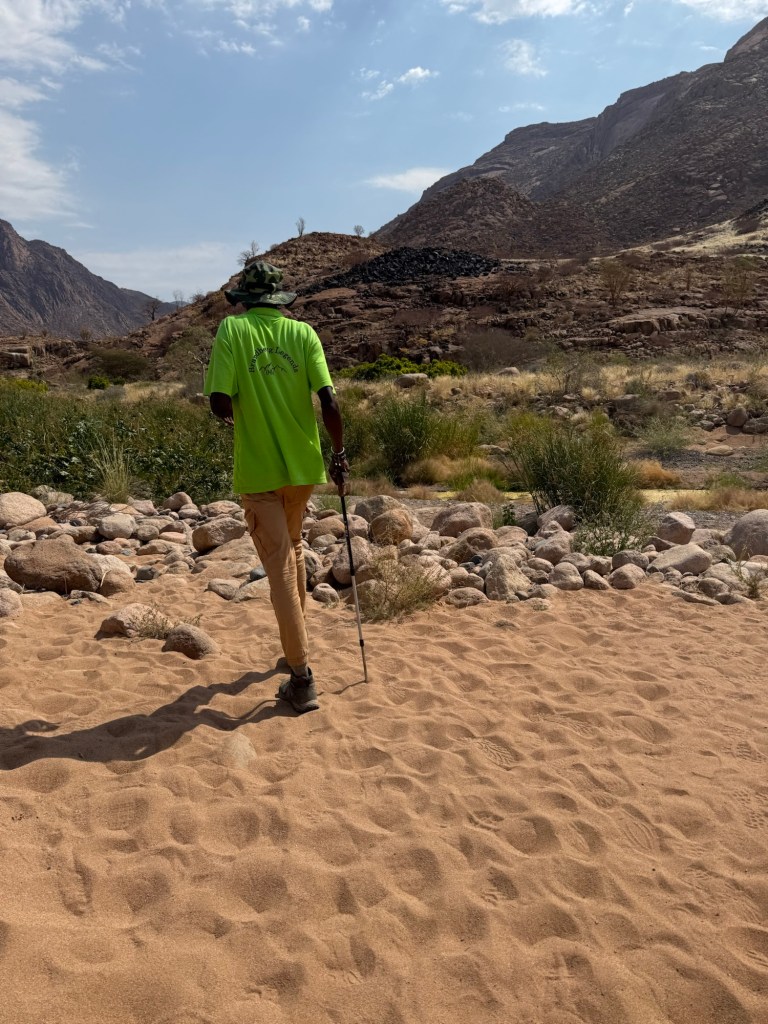
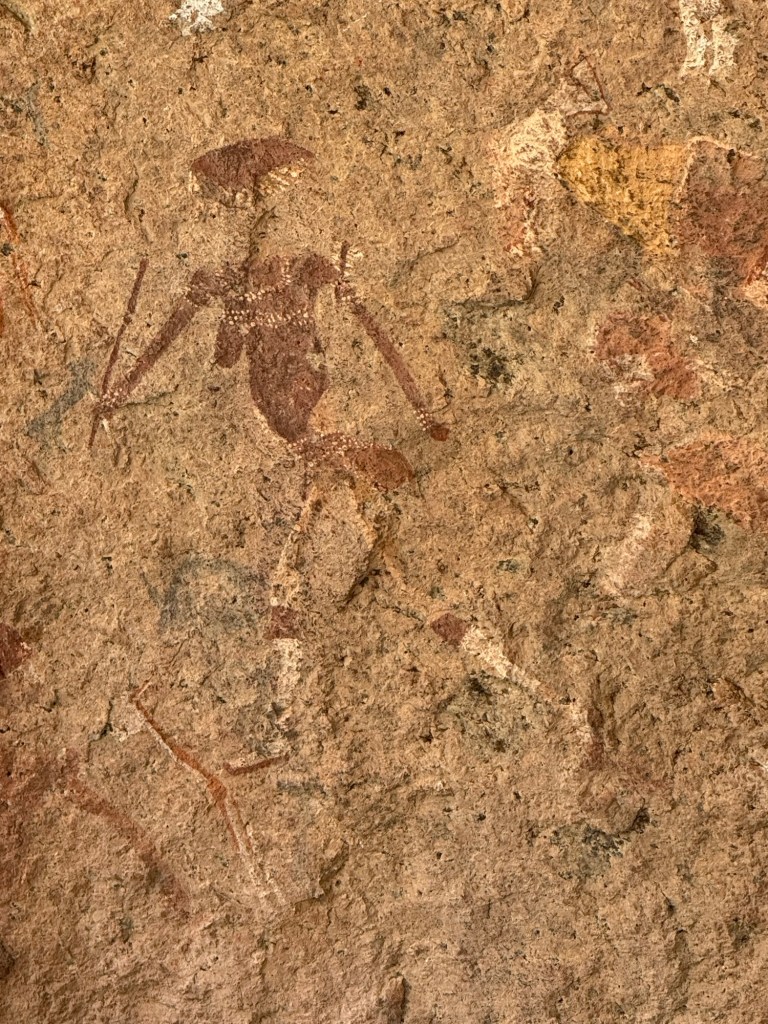
Our group met up with our guide, Justus, who led us on the 2-hour round trip hike to see the White Lady, a pictograph in the mountainside estimated to be around 2,000 years old.
White Lady painting
As we walked, Justus informed us that other paintings, higher up the drainage, are estimated to be older still, perhaps 5,000 years old.
Despite the heat, I thoroughly enjoyed hiking after being in the truck for so many days. Our group delighted in spotting lizards, snake tracks, and various flowering plants, including datura – a plant that, while widely known to be toxic to people and animals, Justus said is carefully used by shaman during ceremony and rituals.
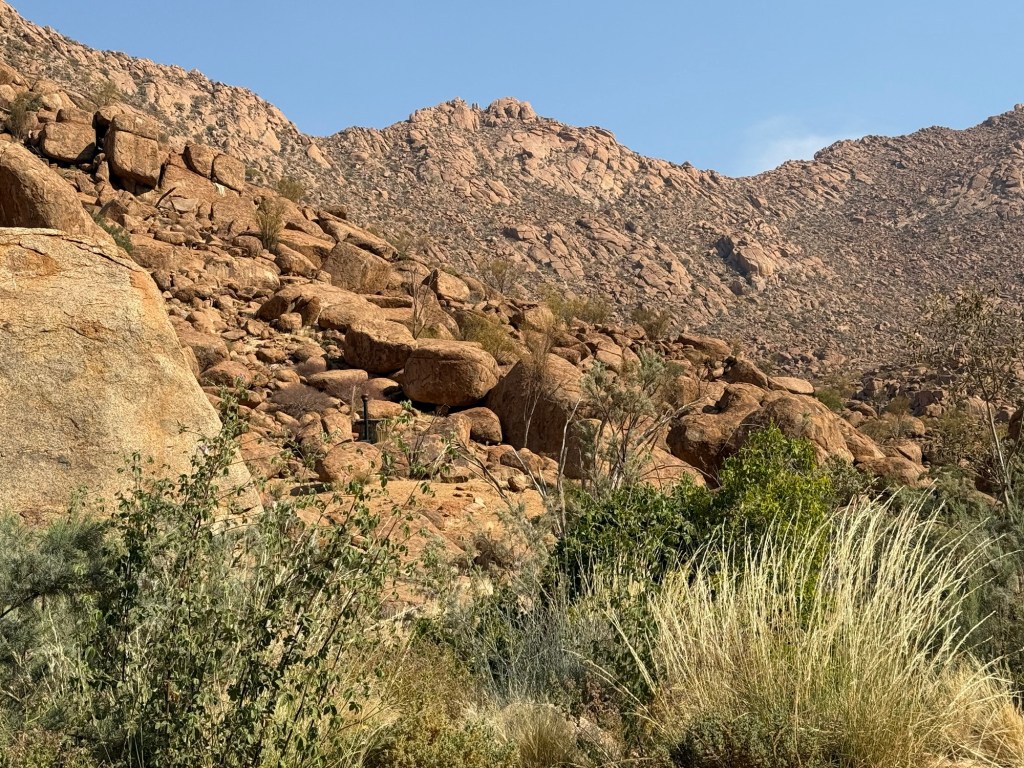
Justus told us that his first language is Damara, which is a Khoisan click language distinct from the language San people, who live in eastern Nigeria, closer to Botswana. He called himself and his people bushmen, explaining that the term encompasses many tribes, including but not limited to the San people. When I asked, Justus said that the term “bushman” is not offensive, at least not to him. Just an accurate descriptor of the fact they live, hunt, and are often associated with the bush.
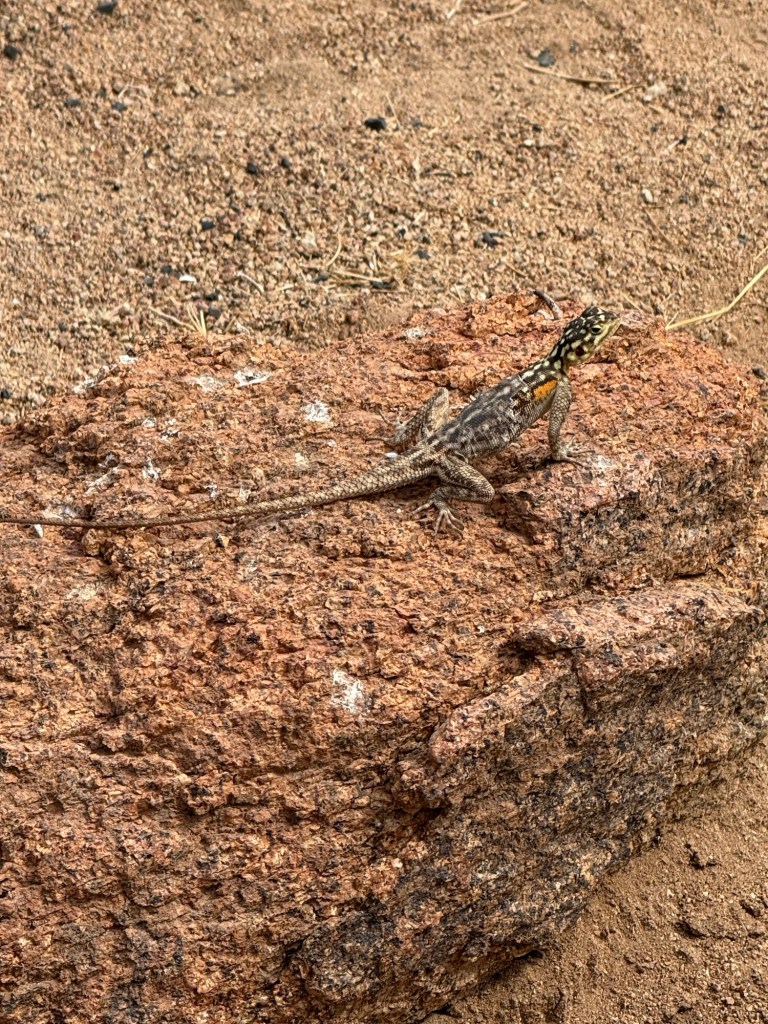
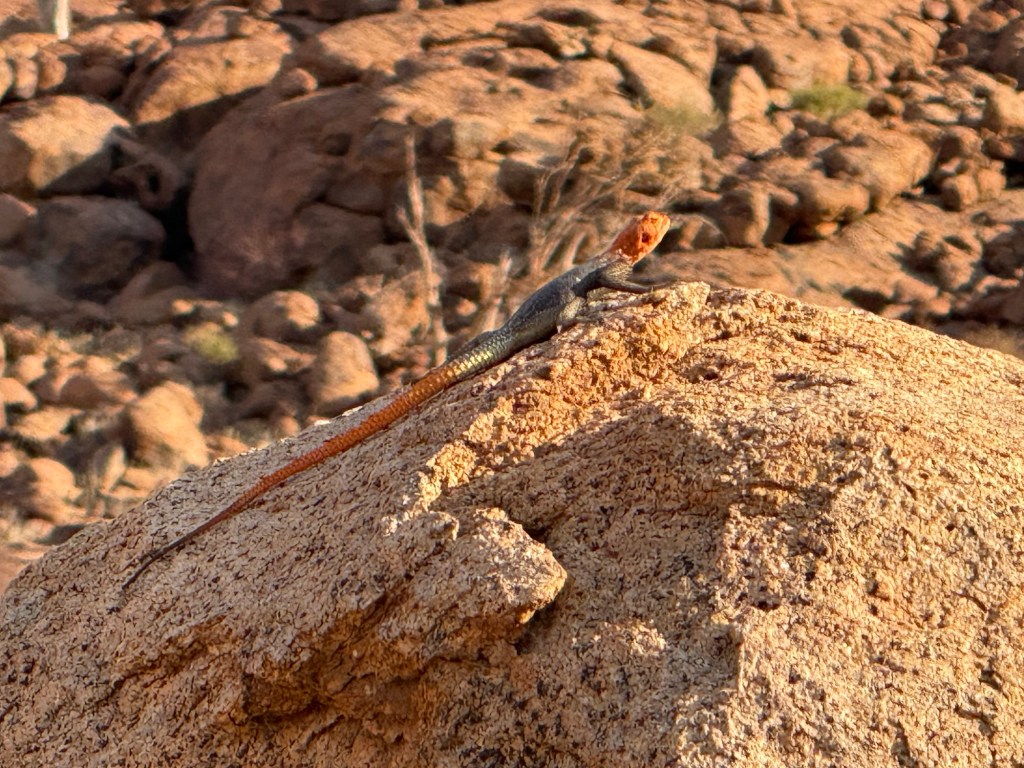
As we walked up the drainage, hopping over boulders and weaving in and out of a dry river bed, Justus explained that his language uses four distinct clicking sounds, in addition to (often intermixed with) Afrikaan words. San people use 7 clicks. Justus says that his people sometimes struggle to understand the San people, who speak in a continuous stream of different-sounding clicks.
Like many Africans we have met on this trip, Justus speaks multiple languages, in his case, a total of five: his native click language, Afrikaans, English, German, and French.
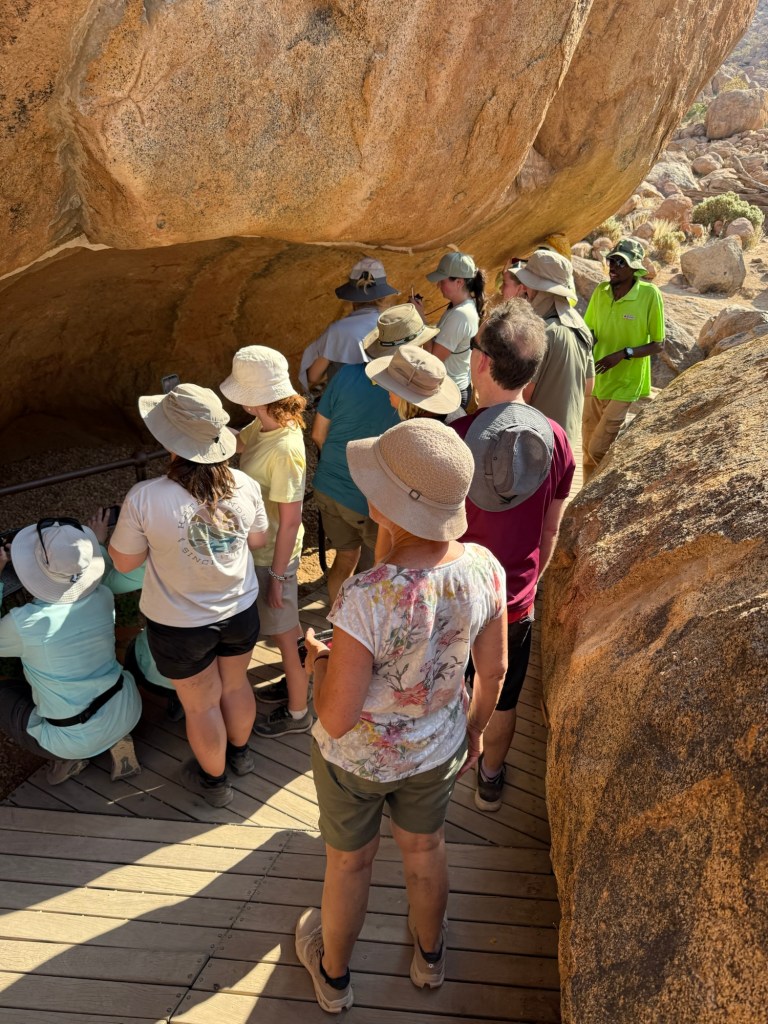
After a few welcome stops in the shade of large boulders, we climbed highest into the mountainside, finally reaching our destination for the day. Beneath the welcome shade of a lean-to structure, Justus told us about the White Lady painting that we had come to see. The Europeans that first reported the painting interpreted the artwork through their own biases – but, he said, his people maintain that the picture is not a lady, but a shaman dancing in the sand. As he worked up a sweat, he continued kicking up dust that accumulated on his dark legs, makes his skin look white.
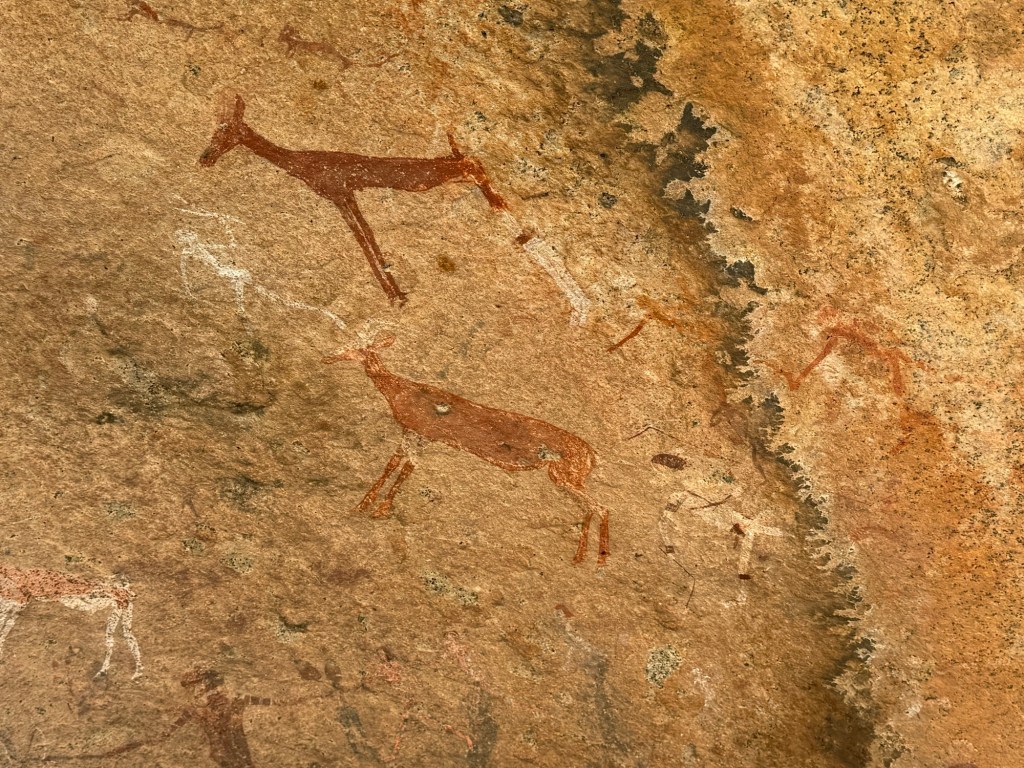
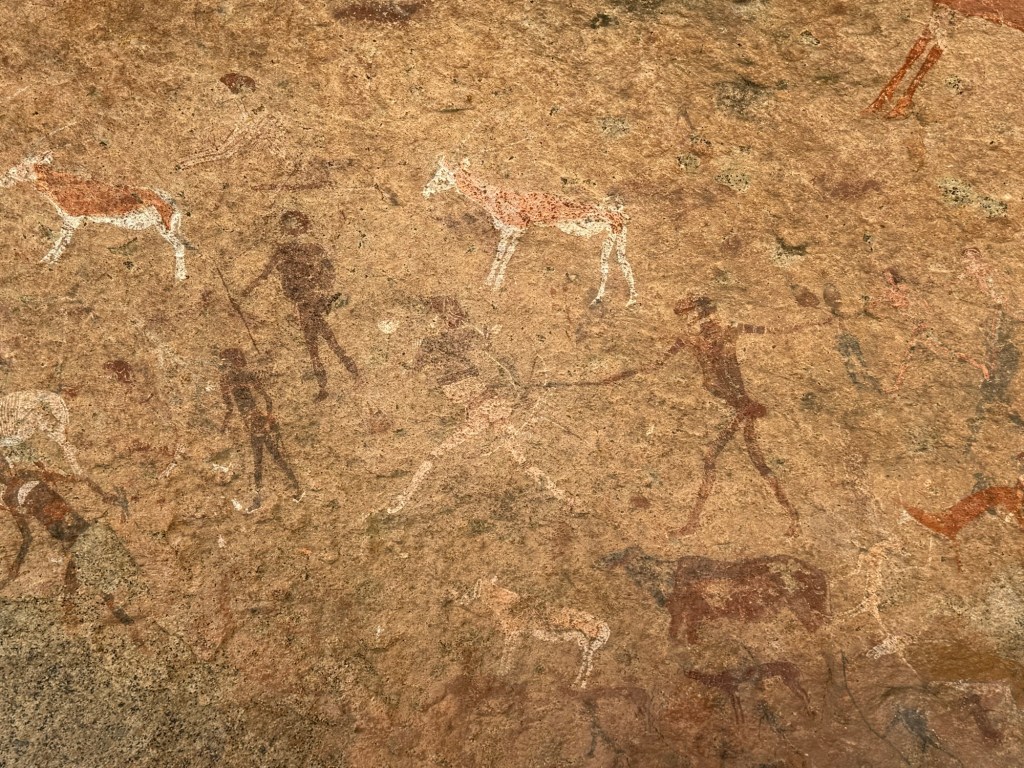
Justus instructed us to leave our backpacks and water bottles beneath the shelter, and bring only our cameras as we climbed up a few steps more onto a platform that guided us to the cave paintings. There, protected behind a railing, was a collection of paintings as clear as any I have ever seen. The various animals of the Namib desert and savanna – oryx, springbok, wildebeast, depicted with human figures, both male and female. We stood and sat on the boardwalk, thinking about the people who had painted these pictures onto the rock, thousands of years ago.

 If You’re Lucky Enough: Carolyn and JD’s blog
are the animals identifiable? They look kinda like cows. I am reading “The Dawn of Everything”. Now I need to compare dates!
LikeLiked by 1 person
I need to go back to a video of the guide interpreting the animals… He identified them, but I am not able to do so confidently.
LikeLike