First, an important update: we were reunited with our bags….
And so, we headed off on safari Saturday morning!
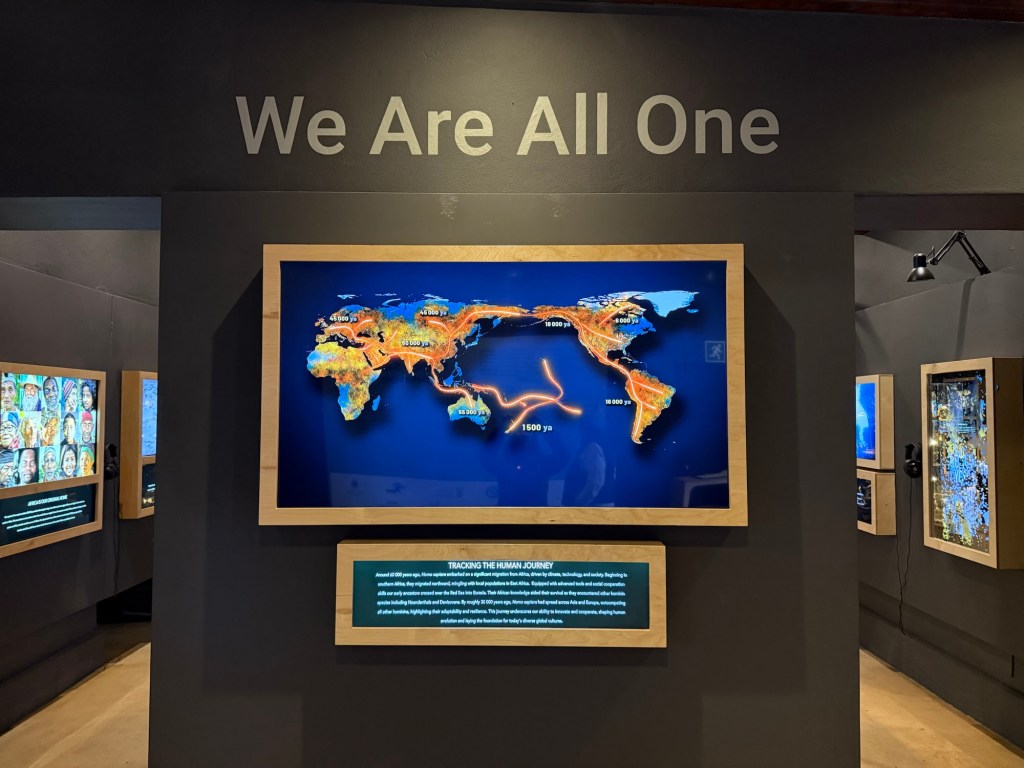
Even though Africa wasn’t on our short list, when the opportunity to visit presented itself, it seemed right to us both. JD and I had tried to get to Tanzania for an International World Ranger Congress, some 10 years ago – but we couldn’t make it work then. This time, I’m finding that coming here is about more than the animals and landscapes we hope to see. We are all, every one of us humans, FROM here. Yes, we have since spread out across the planet, diversifying into countless colors, sizes, languages, and cultures as we’ve done so. But, our collective roots are here, having gradually emerged from other primates, and then other hominids, in a process spanning MILLIONS of years. Particularly now, it feels important to return to this common ground.
Friday, our last day in Cape Town, JD, Jane and I hired a driver to take us down the peninsula to the Cape of Good Hope. Over the course of our day together, we learned that our driver Niyaaz is a fifth-generation South African, whose maternal and paternal grandparents experienced apartheid – meaning they were forcibly removed from their homes, relocated into townships by the white government, required at all times to carry identification papers identifying them as “coloured”, and prohibited from entering certain parts of the city, or dating or marrying outside of their class. Niyaaz’s name is Turkish. His ancestors were likely among those brought to South Africa as slaves by the Dutch, who turned to their colonies in Southeast and South Asia for slave labor in response to native Africans’ initial attempts to resist becoming enslaved.
He shared his ancestry and experience slowly, and thoughtfully, over several hours in response to our questions. Perhaps he felt more comfortable by our group’s willingness to acknowledge the many parallels to America’s own history with slavery and racism – up to the present day. I described the exhibit that I had seen at the National Art Gallery on apartheid and the Truth and Reconciliation Commission, and asked Niyaaz what his grandparents had told him about their experiences. Only one of his grandparents who endured apartheid is still living: his grandmother doesn’t talk about what it was like, preferring to keep it in the past. Niyaaz noted that, with apartheid having only just officially ended in 1994, the wounds are still fresh.
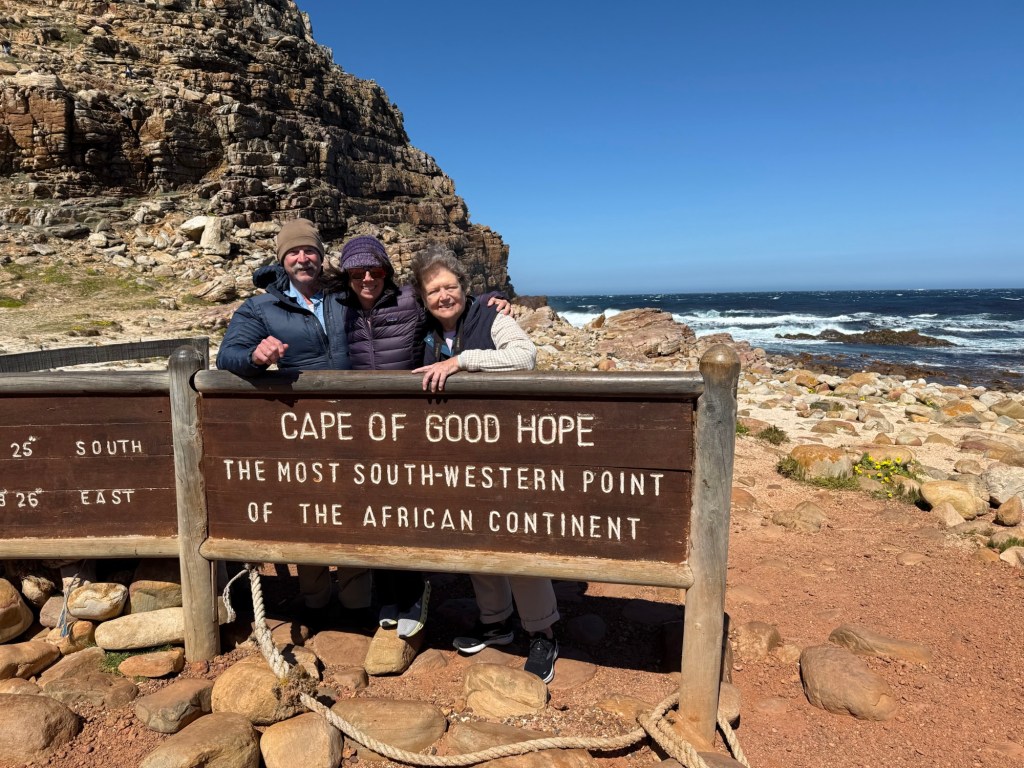
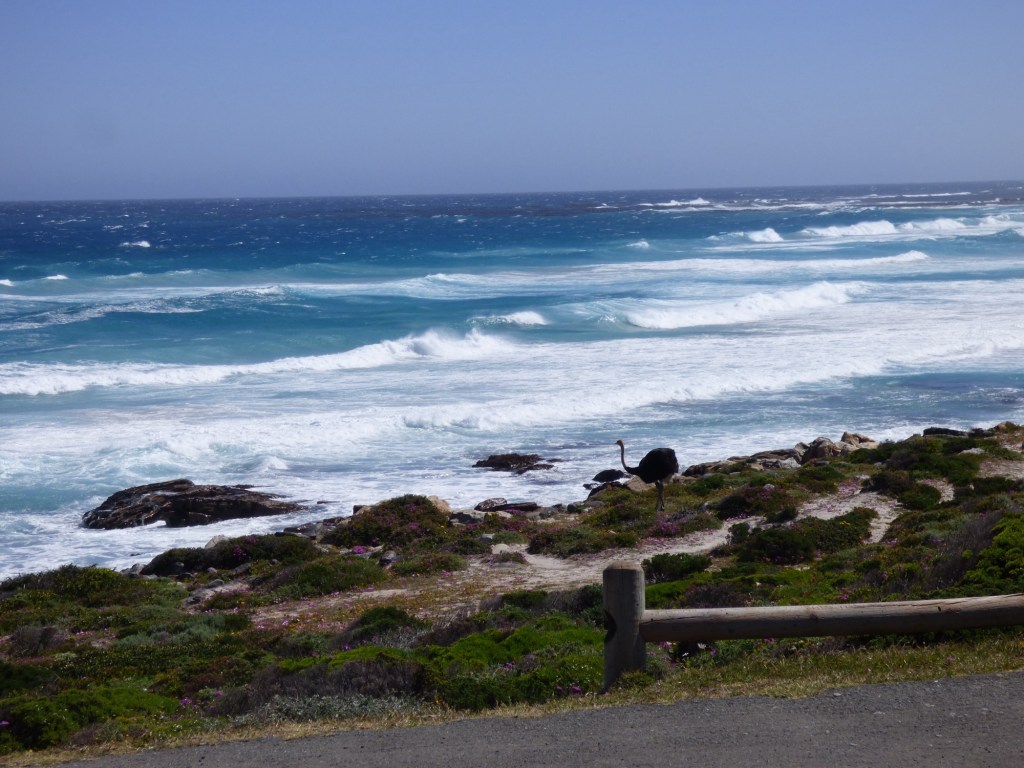
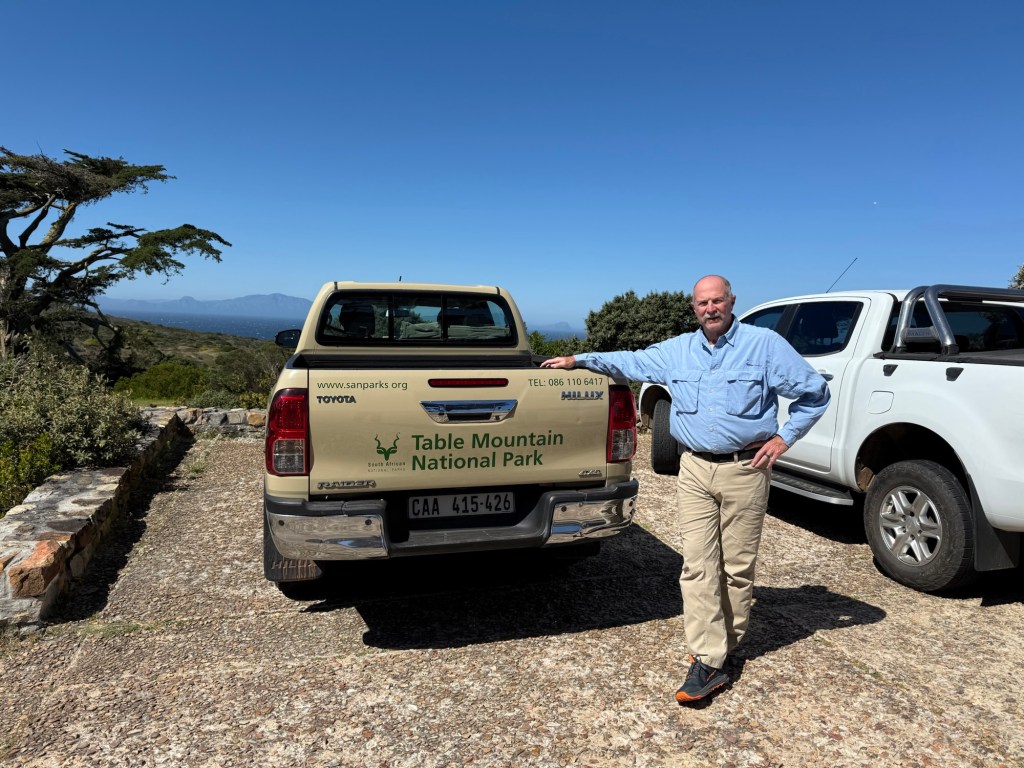
Our scenic drive took us along South Africa’s western coastline to Table Mountain National Park, where we stopped at Cape Point Lighthouse, before heading onward to the Cape of Good Hope – the south-western most point of the African peninsula. There, we saw ostrich grazing by the seashore, along with our first sighting of eland, Africa’s largest species of antelope.


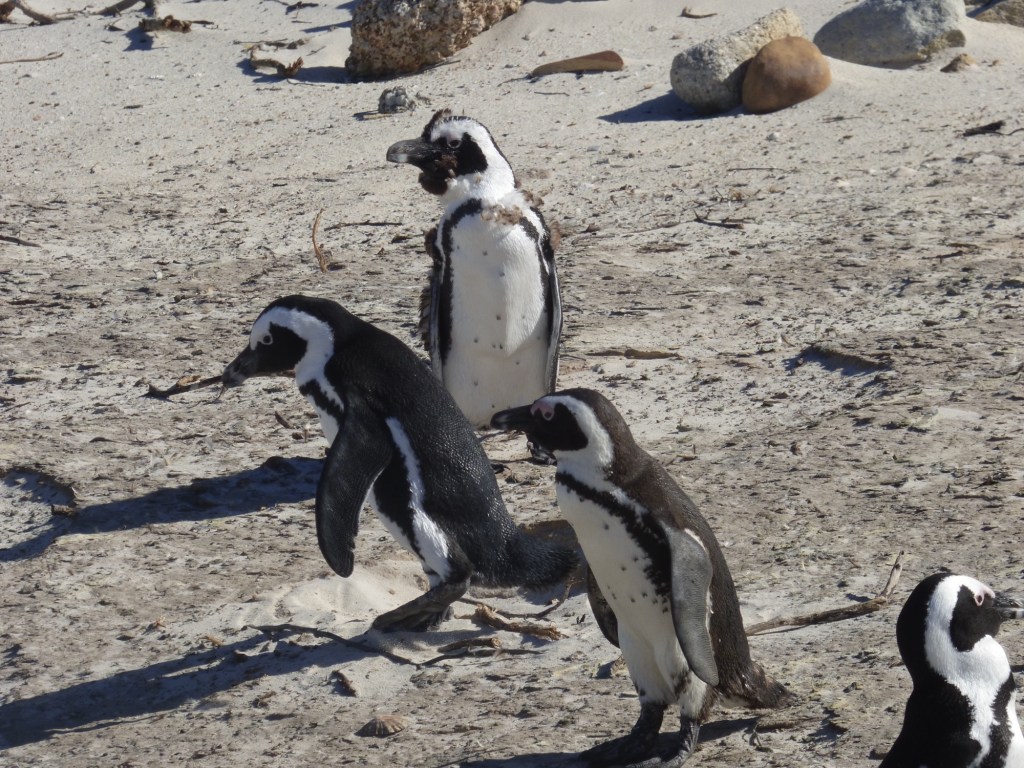
Our final scenic stop was Simon’s Town, Boulders Visitors Center, to see African penguins. They were molting, a process that takes 3 weeks, the purpose of molting is to renew their waterproof plumage. JD described their ragged appearance by saying it looks like they are giving piggyback rides to mice. They mate for life, living 10-15 years. This penguin is endangered, having declined in numbers drastically since the 1930s, with just a few thousand left. There were dozens, perhaps hundreds, of these small penguins just beyond arms reach from us on the boardwalk leading out to the shoreline.
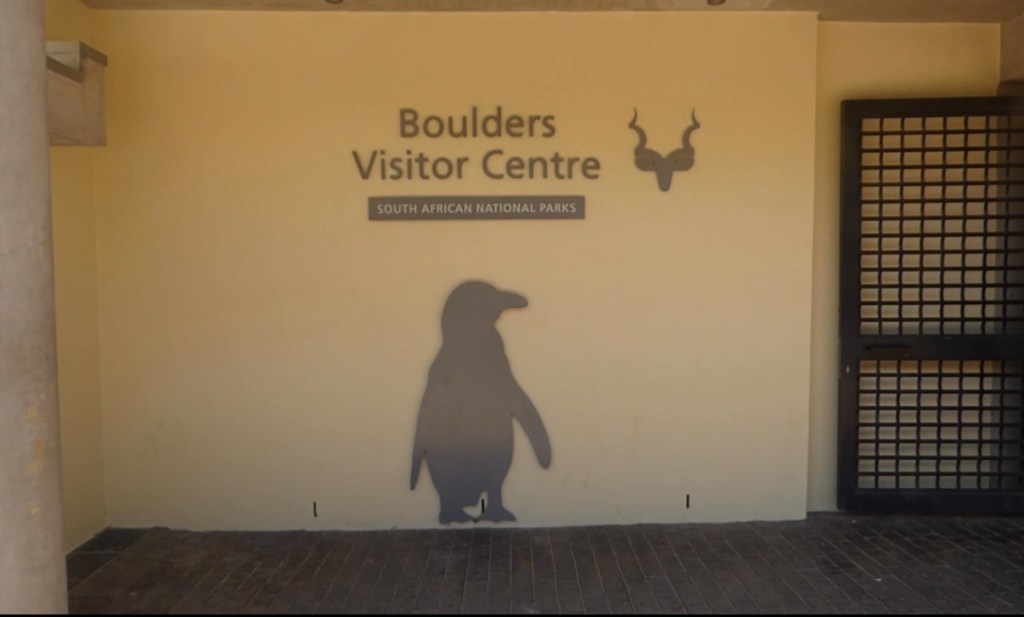
Without question, the highlight of the day for me was the exhibition, “Mother Africa: Human Origins”, within a visitor center Table Mountain National Park. The exhibit, a collaboration among many universities and organizations, as well as the South African National Parks system, includes material from the Sea Change Project, a non-profit environmental-storytelling organization that produced the Oscar-winning film “My Octopus Teacher”. If you haven’t seen this film, you really, really should.
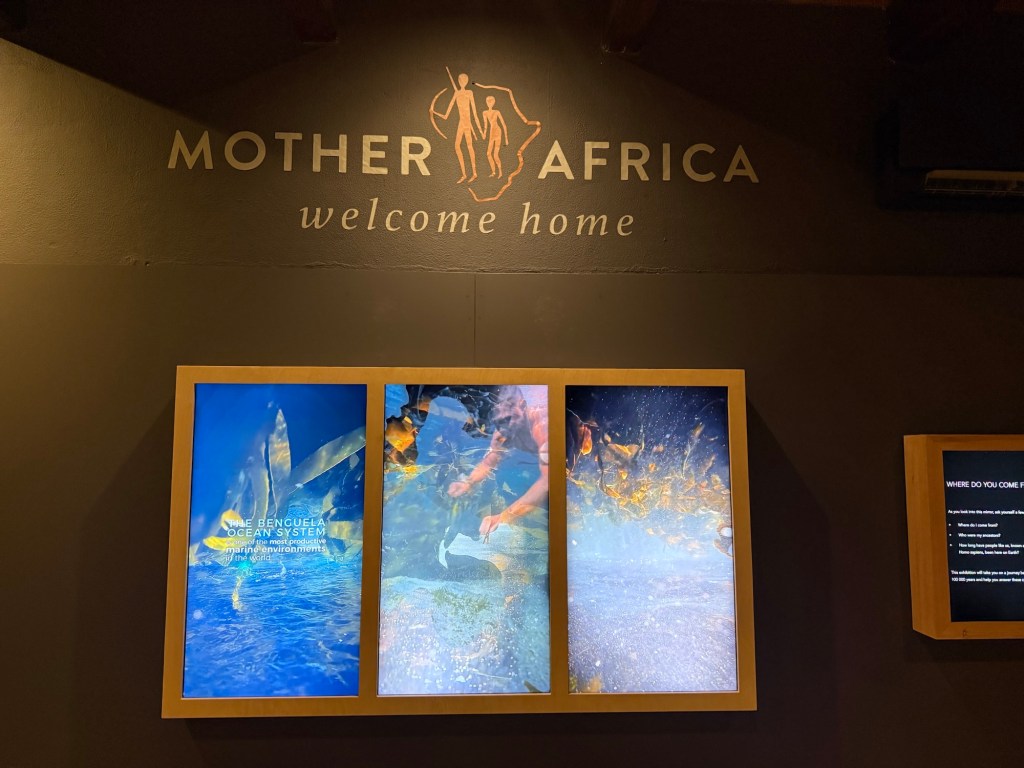
The “Mother Africa” exhibit is devoted to exploring our common roots as descendants from the same place – the African continent – and the importance of our connection to each other, and all life on this planet, our only home. There is so much I want to say, but in this case, I really do think the title of this blog post, taken from the first stop in the exhibit, says it all.
 If You’re Lucky Enough: Carolyn and JD’s blog
Diana and I are enjoying you trip vicariously through your blog. This part of your safari and probably until you turn east towards Botswana will bring back so many good memories for us. Thank you.
LikeLiked by 1 person