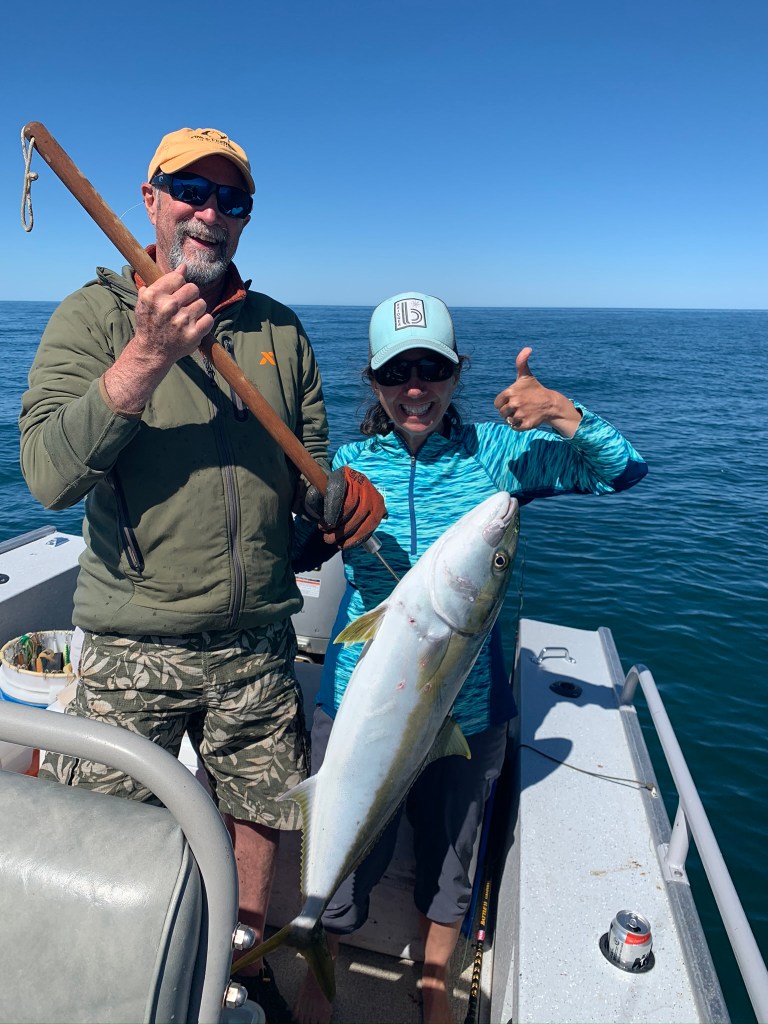
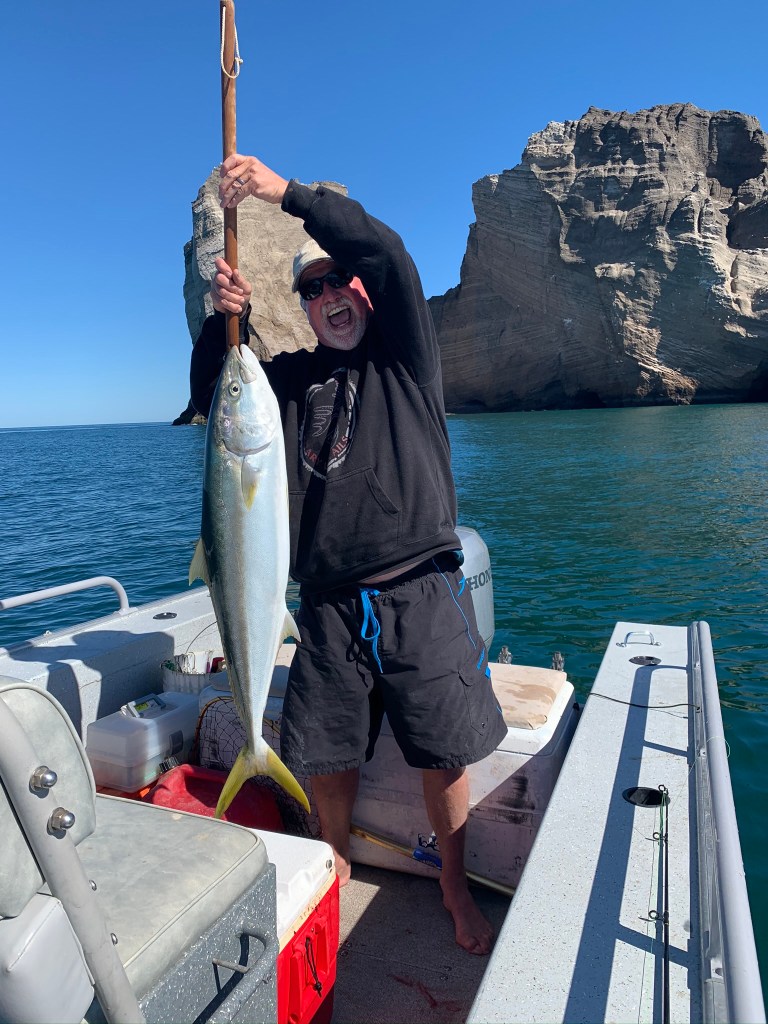
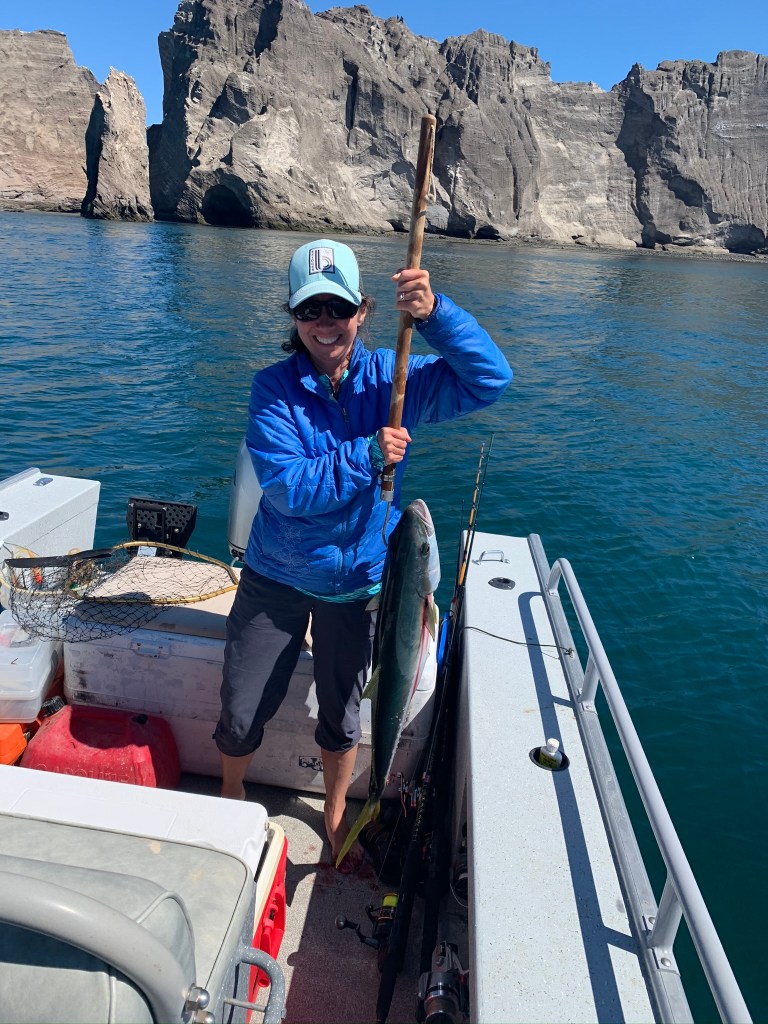
The day after Erik and his parents leave, JD, Lee and I take the boat out fishing. After trolling, unsuccessfully, for grouper, we head for a spot we’ve come to call “yellowtail alley”, behind la Isla San Luis. We arrive, and begin trolling – and it isn’t long before I hook a big fish. It strikes fiercely, and immediately dives deep, pulling out line – yellowtail! Fish ON! The tip of my rod arcs hard toward the water, and the fight begins. JD and Lee reel in quickly, while I work – pull up, reel down, pull up, reel down. This goes on for minutes, my arms growing tired as I maneuver around the bow of the boat, port to starboard, and back again. Lacking strength AND length in my arms, I position the close end of the fishing rod between my legs for leverage. It ain’t pretty, nor comfortable, but it works! After awhile, JD grabs the fishing belt, a stout piece of plastic that clasps around your hips with a receptacle like a giant “outie” belly button, that holds the near end of your fishing pole. He places it around me, while giving me a mixture of instruction and encouragement – “Don’t let any slack in the line! Tip up! Go girl!” Moments later, I get the fish to the surface – its the largest yellow tail I have ever seen, and the biggest fish I’ve ever caught! After one final struggle, JD nets it, and we land it in the boat. Seventeen pounds! Before the day is through, JD, Lee and I have caught 10 yellowtail, averaging 15 pounds each. Our fishing drought is over, water temps are starting to rise, and finally, sport fishing in the Sea of Cortez is about to get really good again – yahoo!!
That evening, son-in-law Erik reports from back home in Bozeman, Montana that he has been told not to report to work as scheduled, because he has traveled out of the country. Due to COVID-19 virus, Erik needs to self-isolate for a week. Before leaving for Baja, a mere week ago, there was no indication that he would be subjected to quarantine; however, his return to the US has coincided with the beginning of governor’s orders for home quarantines and social distancing measures. Our world is changing. Meanwhile, my sister and I begin lobbying our Dad to postpone a previously-scheduled procedure to address atrial fibrillation. Its disconcerting to delay something that could help him get off of blood thinners and alleviate a risk of stroke, but the procedure has already been postponed 10 months. Each day brings a new sense of the severity of this virus, and our societal responses to it.
Trying to preserve a sense of normalcy and fun here on the beach, Lee, Kathy, Anika and the kids, JD and I opt for a Razor ride to Los Palmas, which is an oasis in the desert of sorts, consisting of a spring head lined with palm trees long ago converted into a cattle corral. Although its hard to see a water source so trampled and degraded, water in the desert is still alluring. We load up, with Mama See (that’s me) and grandkids in Papa J’s Razor, and Anika riding as passenger in Lee and Kathy’s rig. We turn up a two-track road leading west off of MX-5, that leads into a dry wash, admiring the ocotillo and cholla cactus amidst elephant trees and palo verde. We arrive at a stand of palm trees and fencing, and take a look around. A truck camper sits adjacent to the corral, abandoned, windows busted out, sides and floor falling apart. Dried, not too old, cattle dung coats the ground. The beginnings of a cement building, along with a rusty cement mixer, sit on a small mound overlooking the site. A grave marker, denoted by a white cross painted on a rock, sits further upslope from the spring, corral, and abandoned building. Ember and Colter, happy to experience something different, run through the sand, challenging their mom to a foot race. When our tour is over, Anika and I exchange places in the Razors, and we head for Rancho Grande, our nearest gas station and source of provisions, where we order a few burritos from the adjacent restaurant, and the kids alternate bites of quesadilla and ice cream sandwiches. Making an effort not to touch anything unnecessarily, we finish by wash our hands with soap at the market’s outdoor sinks.
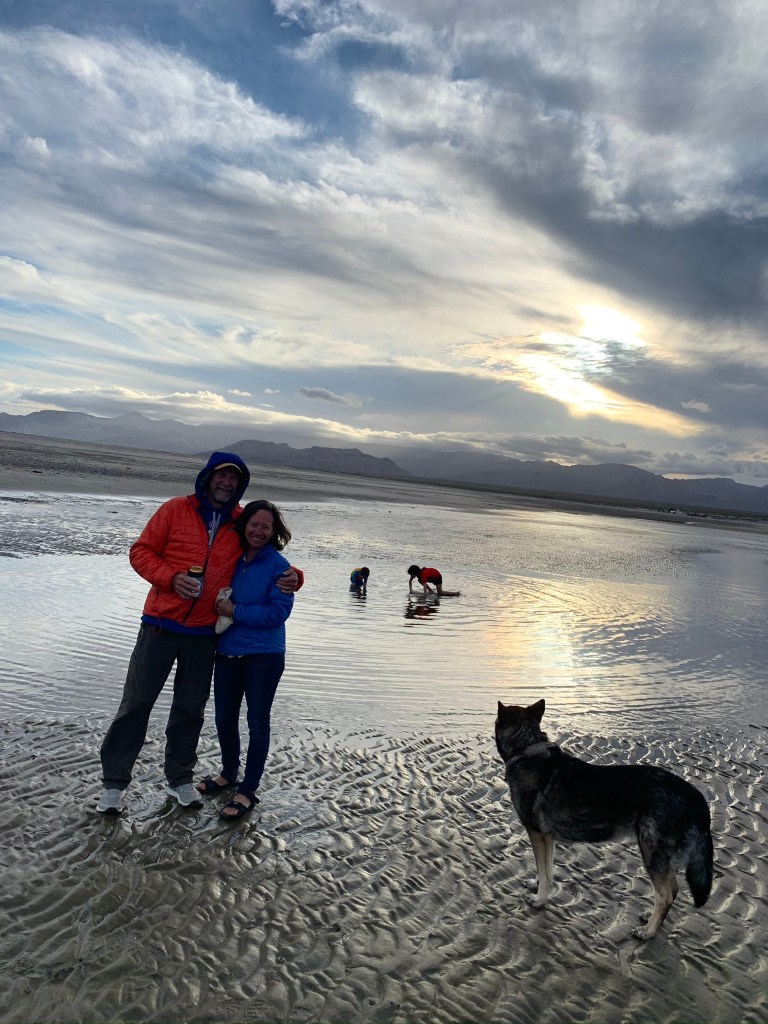
With each passing day, it becomes harder to ignore the stark realities of the escalating pandemic. As each of us struggles to comprehend, and accept, the national TV news and our internet news feeds, our household of five adults begins daily conversations about whether to stay, or go, while Ember and Colter continue playing all around us, in the sand, and the water. Initially, the views of our group spans a reasonably wide spectrum – some question the level of panic over a flu virus, others adamant that the government responses aren’t severe, or swift, enough. Similarly diverse is our need for information – some glued to the TV and their phones, sharing grim statistics on the looming crisis from across the globe, others disengaging, trying to remain calm. Eventually, we all agree that we feel personally safest here on the beach, where we are essentially isolated already – there are only four other people in the 20 other houses here on our stretch of beach, and we aren’t socializing with them. We are already well stocked on provisions, with little need to go anywhere except down the road for drinking water. Out our front door, we have unrestricted access to the beach and the ocean; at our back door, the dessert. It is paradise, and we feel lucky to be here on any trip down, even – and especially – this one. And yet, we also acknowledge that if any of us were to get sick down here, medical treatment is far away. We are each also struggling with feelings of obligation and longing for our loved ones back in the US, and the uncertainty and fear that if we don’t leave soon, we might not be able to return if they need us. Anika is separated from Erik; my Dad has multiple risk factors for this virus, and my Mom can no longer live alone; JD’s younger daughter Kara is pregnant, with a due date of May 1; Lee and Kathy’s kids have their hands full homeschooling children amidst changes in jobs and financial security.
We spend days discussing and reassessing our options, watching with a sense of increasing dread as the nightly news reports the exponential increases in confirmed cases and deaths, in the US, and abroad. JD and I begin to check US State Department and Mexican Consulate websites, and check in with other gringos from down here on the beach, some of whom have already returned home. What is a border closure, really? Can a home country deny entry to its citizens? Within 24 hours, the US State Department’s travel advisory shifts from “use caution” to “return home or plan to stay indefinitely.” We learn that existing US law prevents a home country from denying entry to its own citizens, although it is clear that if we do return anytime soon, we would likely face quarantine and substantial delays getting anywhere.
It becomes clear that we are all cycling through the stages of grief – denial, anger, bargaining, depression, and acceptance – in different orders, and different rates. Some of us hit our breaking point earlier than others, but over a series of days, each of us expressses our utter exhaustion and longing for someone to “just tell us what to do.” I broke first, tearfully admitting my struggle to reconcile my concerns for my parents back in South Carolina with my desire to remain with JD, given his 10-year history with chronic bronchitis and pneumonia, while preparing breakfast for our group. As my tears surfaced, Kathy gently took the spatula and continued cooking, as I walked over into JD’s embrace. Noticing that merely acknowledging my conflicting emotions aloud helped me to take the next step toward a decision, to set aside the hypotheticals surrounding my parents’ health status and focus on the need, and opportunity, to stay here, in a sacred place, with my husband. Ultimately, we decide to stay, together, and once made, I instantly recognize it as the right decision. Lee and Kathy decide to remain here with us too, and both JD and I are grateful for their company. Anika decides to take the kids and return to Montana, feeling the pull of home and hunkering down with her husband, as well as helping out where she can at work. Anika and Erik then begin the arduous process of working to change her original flights, which routed her through Denver, to a direct flight home.
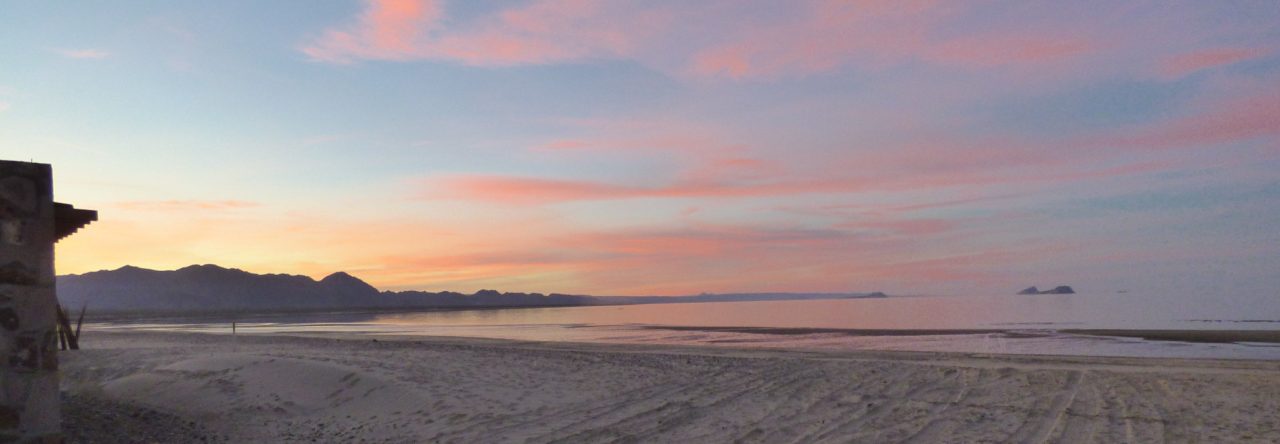
Meanwhile, the weather steadily improves, returning to sunny, clear days and beautiful blue seas. Recognizing and respecting my need for exercise, I resume running out to a place on the far side of Punta Bufeo known as Miquel’s beach. My route takes me out the sandy, washboard Punta Bufeo entrance road, past the sand dunes, and onto a two-track road that crosses through the creosote and mesquite shrub-scrub, across the playa, and back through grassy foothills, where I reach a small rise where the Sea of Cortez finally comes back into view through a small, 100 foot wide break in the coastal cliffs. I follow the road down another quarter mile down to that spot, scampering across boulders teeming with isopods out to the waves, crashing on the rocky shore. It’s just over three miles to this point, a good run that is well worth the effort. This year, I’ve begun taking a swim in the water to cool off. I do so, and stand at the water’s edge as it crashes over the rocky shore. The tide is coming in quick. Pelicans fly overhead, the Mexican air force. A pair of cormorants jockeys for position atop a single exposed rock some 30 feet from shore. Along my return to the house, JD picks me up in the Razor: he has come looking for me. We go for a short ride, stopping at the top of the sand dunes, facing the Sea of Cortez, overlooking the houses on Punta Bufeo.
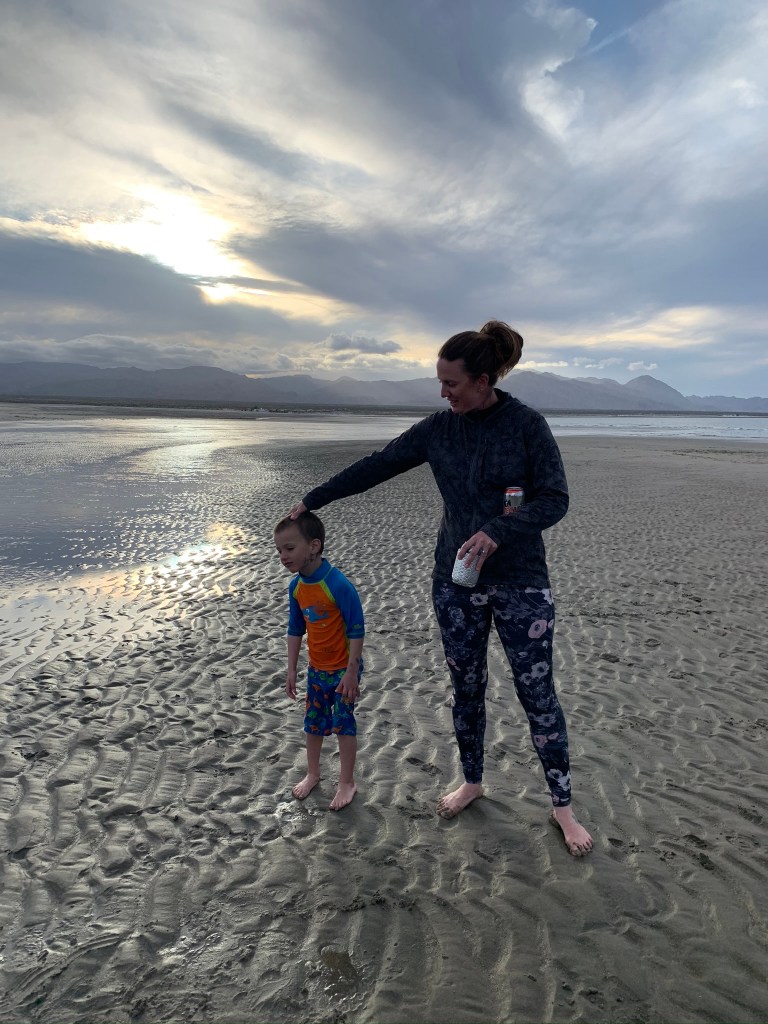
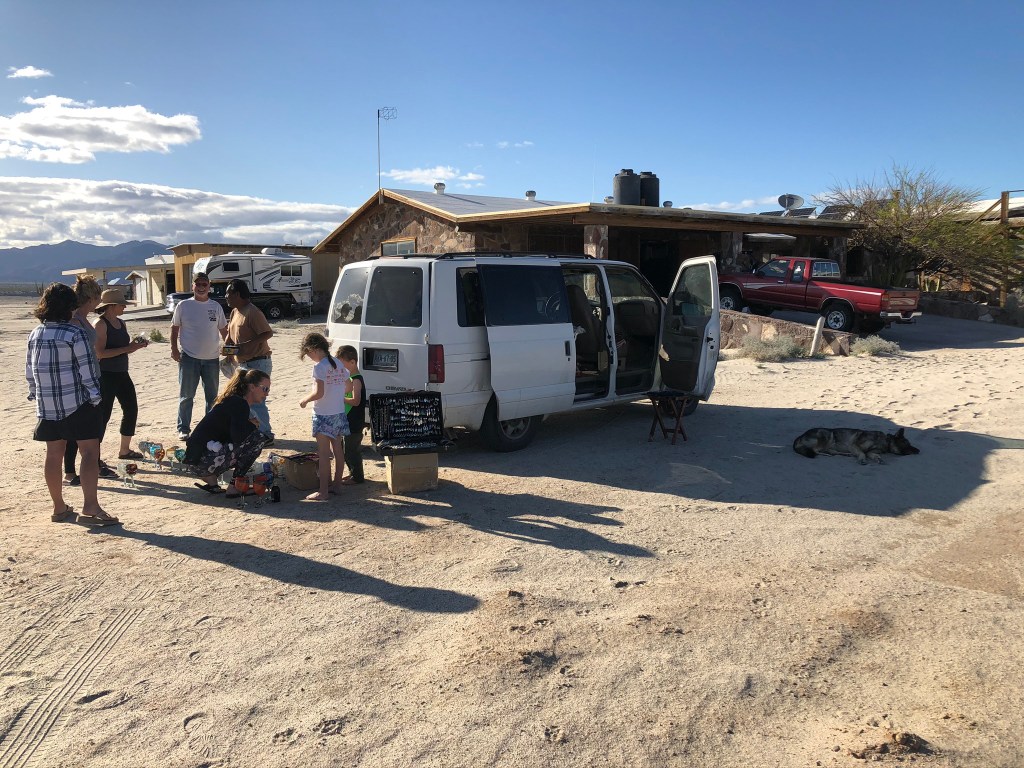
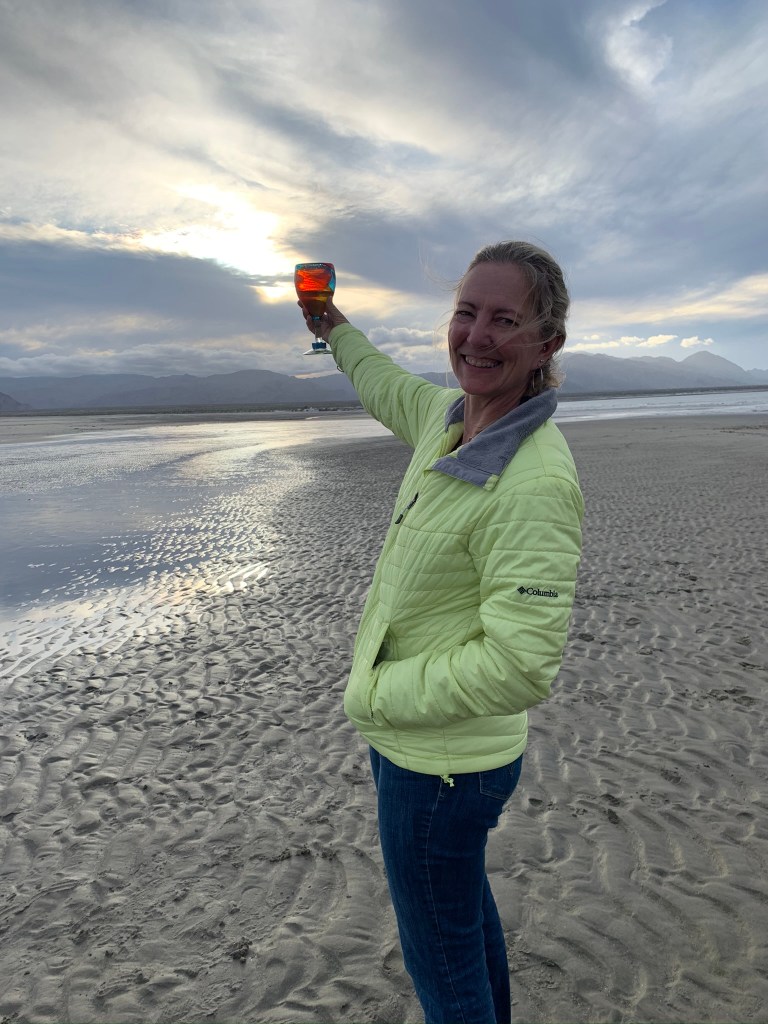
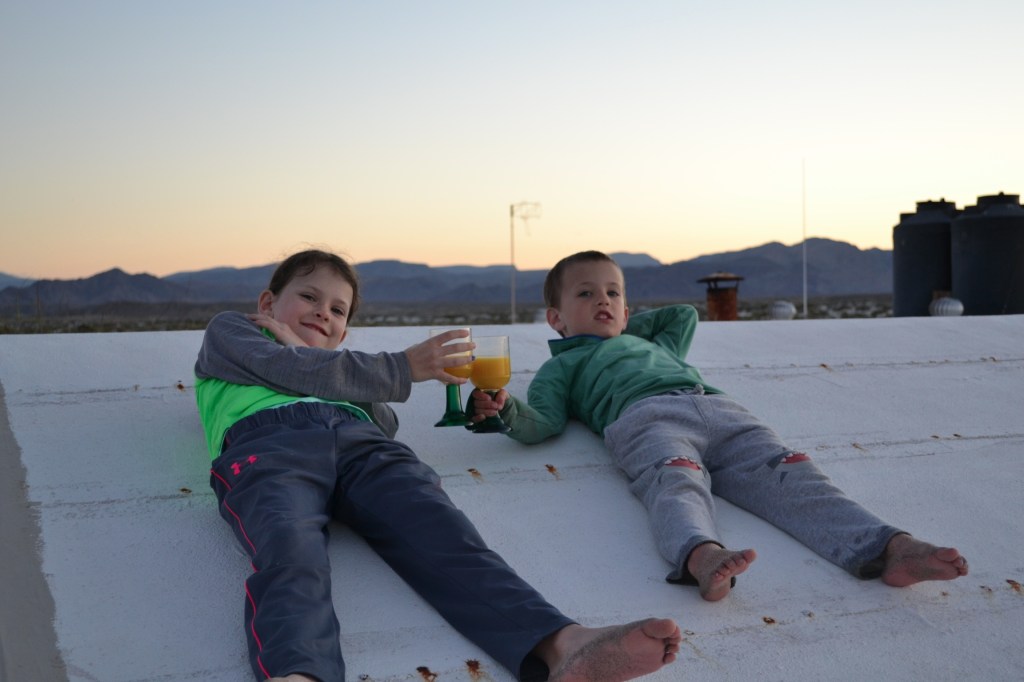
A few days before Anika is due to leave with the kids, a Mexican vendor by the name of Salvador arrives on the beach in his white van. Salvador has been visiting Punta Bufeo for decades, selling wares from his shop in San Felipe, garnered from throughout Mexico. He has earned a reputation as an honest, friendly, humble man, and when he comes to our beach, we make an effort to purchase something from him, even if only a small trinket. This trip, he tells us he is carrying goods straight from Mexico City – a colorful array of patterned wine, whiskey, and shot glasses; serving bowls for salsa, guacamole, and other fare; tortilla warmers; mexican blankets; keychains; jewelry; braided rope bracelets and anklets. He opens the rear and side doors to his van, encouraging us to look inside as he describes what he has, gauges our interest, and begins pulling out items for us to examine. Our entire household is shopping, including the kids, as well as some neighbors from down the beach. Before we know it, Salvador has unwrapped dozens of pieces of pottery and glassware, and placed them out on the sand to tempt us. He is continuing to retrieve items from his van, when we realize how long it will take him to put everything back, and we jovially tell him to please stop! Ultimately, JD and I purchase two wine glasses and a whiskey glass, a tortilla warmer, and a pair of small serving bowls. Lee and Kathy purchase some glasses, Anika as well. Anika allows Ember and Colter to pick out bracelets for themselves and some friends, and two glasses for their “bugaritas” – a nickname coined by Colter some years back, when he asked Anika what the adults were drinking at cocktail hour. He wanted his own “special” drink: the name, and the tradition, has stuck. A bugarita, for the uninitiated, consists of fruit juice and something fizzy, like sprite or soda water. That evening, Ember and Colter got to drink theirs out of their own, grownup-style glasses from Salvador, out on the roof!
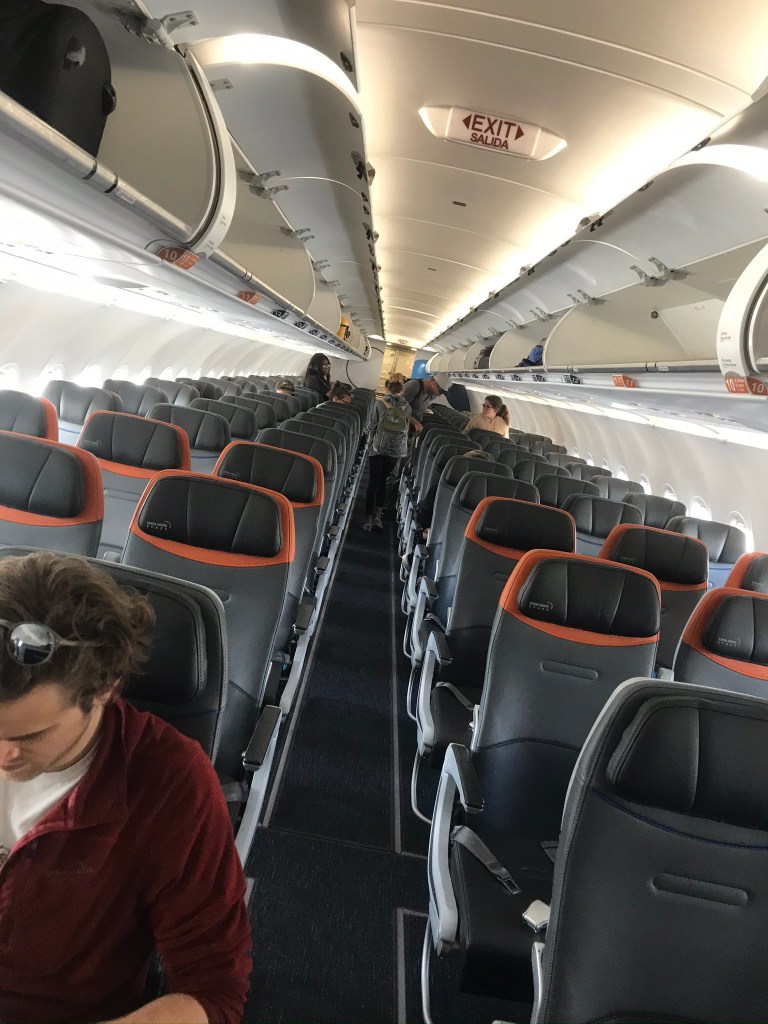
Saturday arrives, and that morning, JD heads out early to drive Anika, Ember and Colter to the border at Tecate. Our friend Doug has generously agreed to come pick them up and take them to San Diego, where Anika will rent a car and drive the rest of the way to Long Beach for a nearly-empty flight home with the kids. As JD drives Anika to border, Kathy and I drive up to San Felipe to shop for provisions – produce, rice, beans, tortillas, and, of course, toilet paper, as we are hearing from friends and family in the states that the shortage is real. In San Felipe, we are greeted by clerks with face-masks holding bottles of hand sanitizer as we enter the grocery stores. Kathy and I return, road-weary, just before sunset. She and I reluctantly venture up the beach for a meal with friends Marty and Kim from further up the beach, as we wait for JD’s return from the border crossing at Tecate. Marty and Kim are returning home to Washington State the day after next. As we conclude our meal, I come back from the restroom to find a pair of young, 20-something American guys have taken their seats at a table adjacent to ours. They are spear fishing, and they arrived from Los Angeles yesterday. My heart begins to pound; I feel the need to leave, immediately, rising in my chest. I want to go, but social etiquette is hard to break, and so I sit quietly, attempting to join the conversation. The talk, of course, is about the virus, and our table begins to ask about conditions back in the US. The pair – I’ll call them boys – show their age as they make a flippant remark about people “losing their minds over the need to prevent grandparents from dying.” I cannot contain my temper, and turn to face them, asking if they are aware that substantial portions of the hospitalizations and deaths in Europe have been 20 to 40 year olds. They stare at me silently for a second, probably sizing me up as yet another hysterical germaphobe, before politely acknowledging that they weren’t aware of this statistic. I turn to my table, make my apologies, and express the need to leave, citing my desire to be home when JD arrives from the border. For once, I am utterly unconcerned for breaking up a dinner party.
Marty graciously pays our tab, and we bail out of the restaurant, heading for the house. JD arrives soon after we walk in, and I’m so relieved to have him back safely. Anika is en route with Doug, and JD, Lee, Kathy and I have decided to stay.





So good to hear you are well. Keep safe.
LikeLike
Thank you, Barb. We are safe and hope you are, too.
LikeLike
Wow, so many emotions; it must be draining.
Please be safe, we love you!
LikeLike
Stay safe.
LikeLike
Thanks Denise. We are. You too!
LikeLike