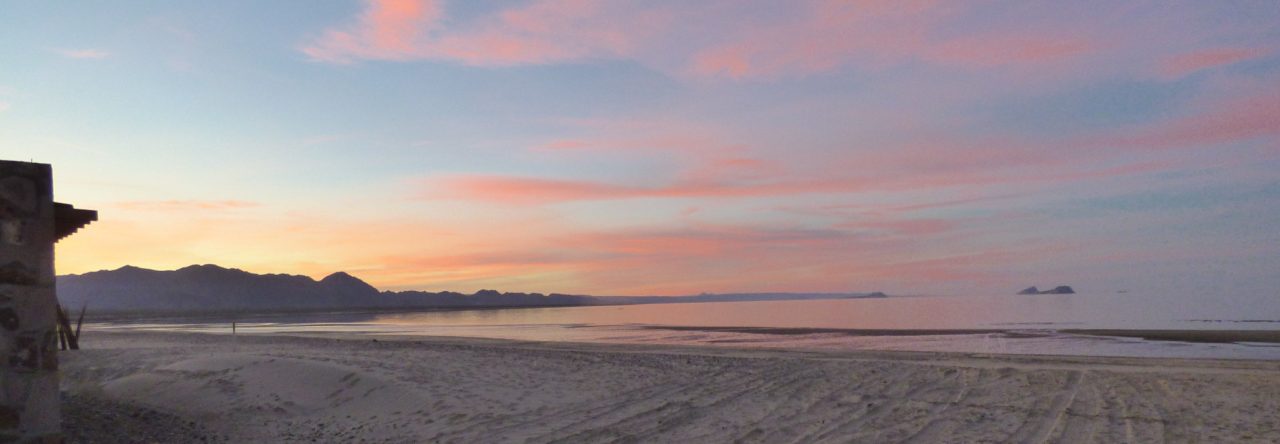
We met the guides who were to take us into the Okavango Delta, Matsaudi and Shaku in Maun, Botswana. There, pared down our gear to one backpack apiece, our group of 17 Nomads transferred from Stevie to two open air 4×4 Toyota Land Cruiser safari vehicles. We drove for five hours through the woodland savanna, to a remote wilderness camp in the Khwai Conservation Area of the Delta, where we spent the next two nights exploring Moremi Game Reserve, and portions of Chobe National Park. I could write for days about our experience; hopefully one day I will. But here are some highlights.
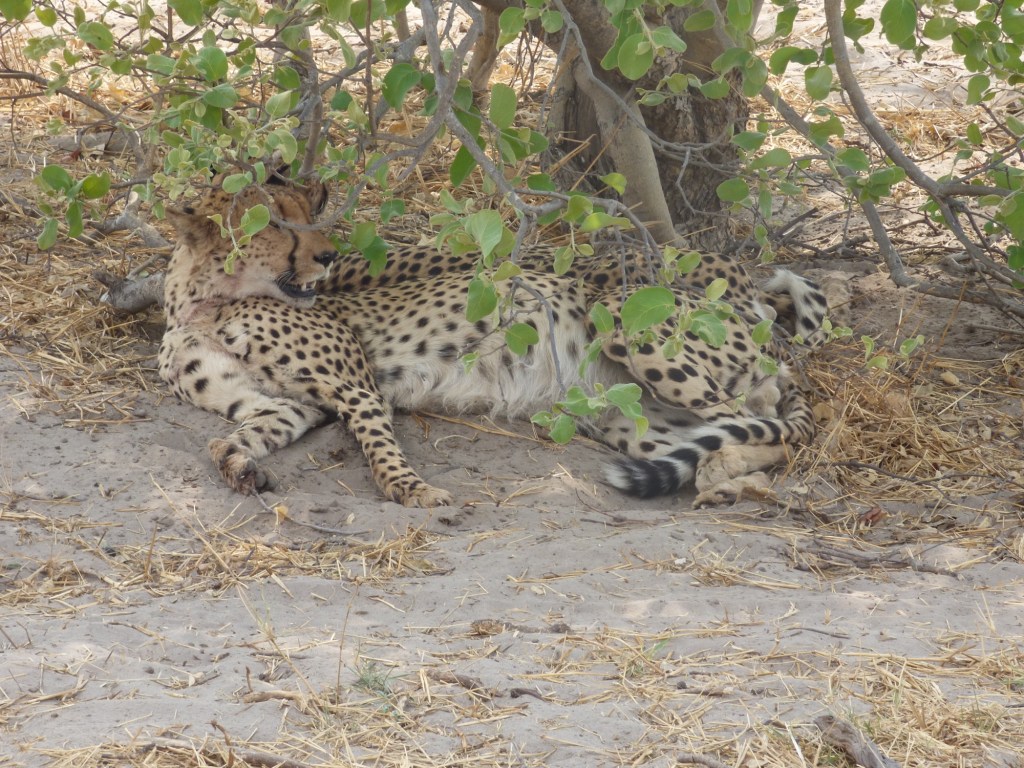
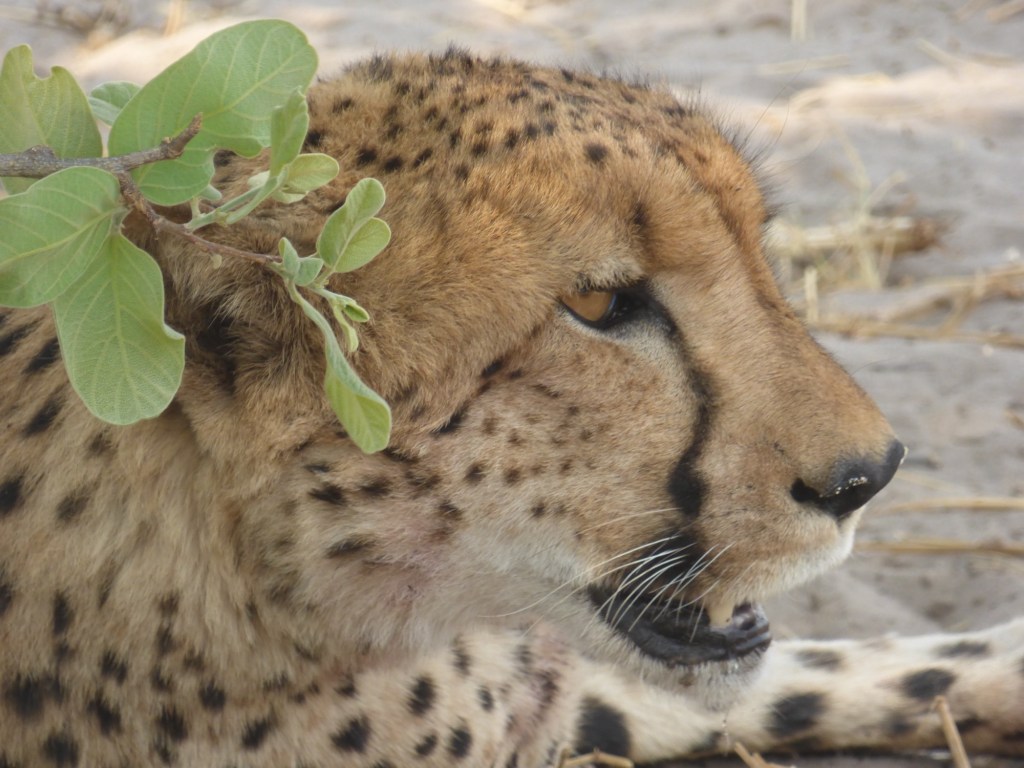
After several hours into our initial drive to camp, our guides learned of a cheetah sighting. With focussed determination, they brought us to two cheetahs resting in the shade of a bush, after feeding that morning on a kill. This was doubly important because it provided an opportunity for JD and me to satisfy a request from our 5-year old granddaughter, Levi, who wanted to know if the African cheetahs knew her stuffed cheetah, Lloydie.
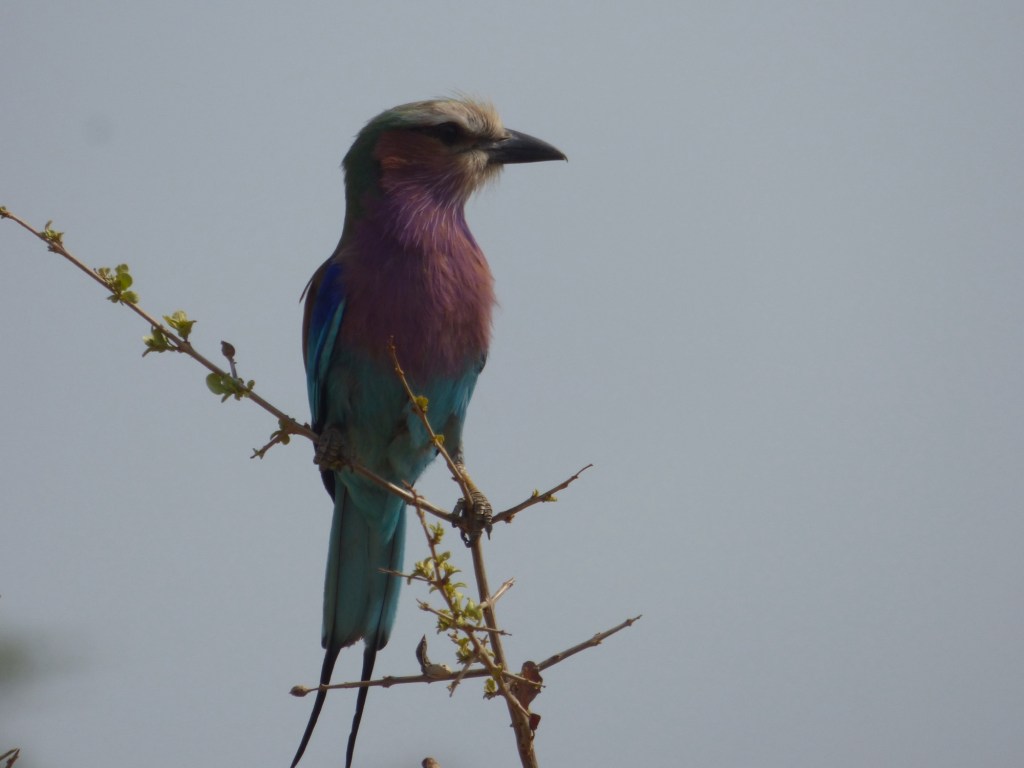
Hours later as our vehicles began to approach the waters of the Delta, we began spotting hippos, as well as many species of birds, including my new favorite of the trip, a lilac breasted roller. In flight, the bird when viewed from above is a stark contrast of black body and brilliant turquoise, with a dramatic, lengthy tail. When perched, the lilac-red breast fades to purple and turquoise. We saw dozens of this and other types of rollers during our time in the Delta – they are named for the noisy maneuvers they make in flight, when feeding or defending territory.
After transitioning in and out of the woodland savanna for another hour or two, our jeep trail emerged at the edge of marshy wetlands bordering a shallow but flowing channel. A few men holding tall, wooden poles came into view. Matsaudi and Shaku parked the vehicles, and we got out. There we met Punk, and his fellow guides, who were there to take us, two by two, for an evening paddle through the Delta in their mokoro canoes.
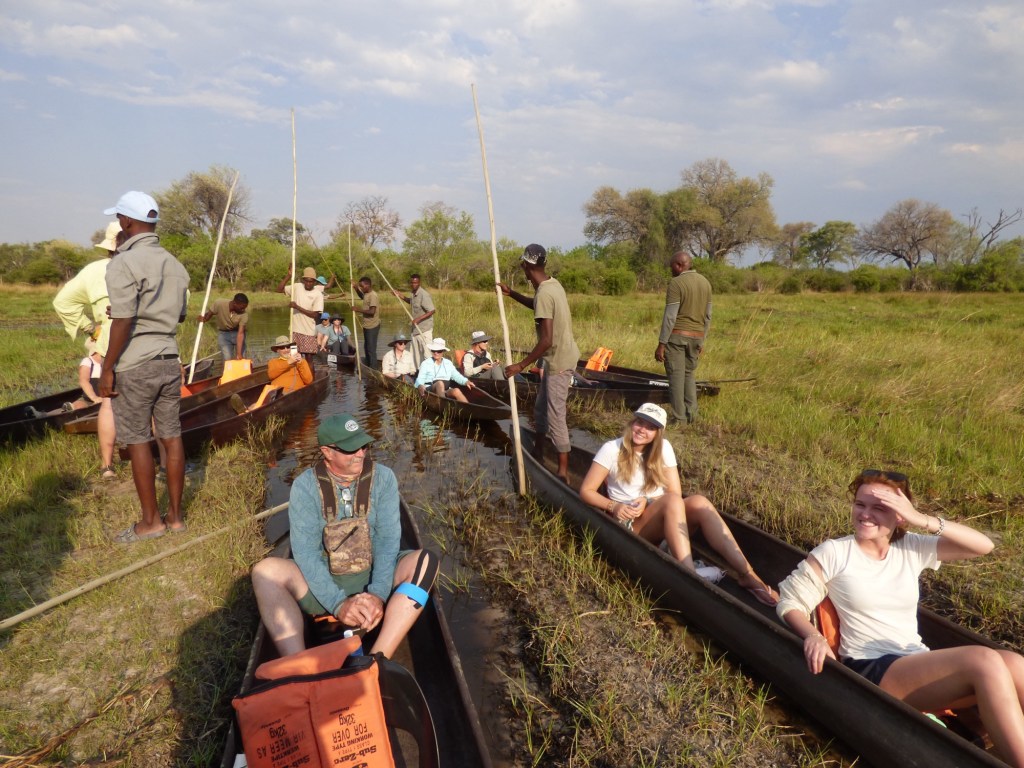

After a round of introductions Punk welcomed us all to the Delta, and gave us a brief orientation to the mokoro canoe – historically dug out of tree branches, now more often found as modified, fiberglass versions like the ones at our feet. They are powered by one person standing in the stern, propelling with a long pole; Punk and his friends would do the work, all we needed to do was sit, be still, and savor the experience. After days of noisy, bumpy, dusty, hot and sweaty overland travel, our group was more than ready.
JD asked the boatmen who the best paddler was, and they quickly all looked at Punk. So naturally, JD and I hopped in his canoe. One by one the boatmen pushed off from shore, and we floated out into the waters of the Delta, drifting through water lilies in boom, as Punk told us about becoming a certified mokoro canoe guide, the history of his family and tribespeople, and Botswana’s independence from white colonial rule, which was achieved 59 years ago, on September 30th of this year. The humble, non-accusatory yet matter-of-fact way in which Punk spoke of this history, acknowledging both what the whites gave, and what they took away, was powerful.
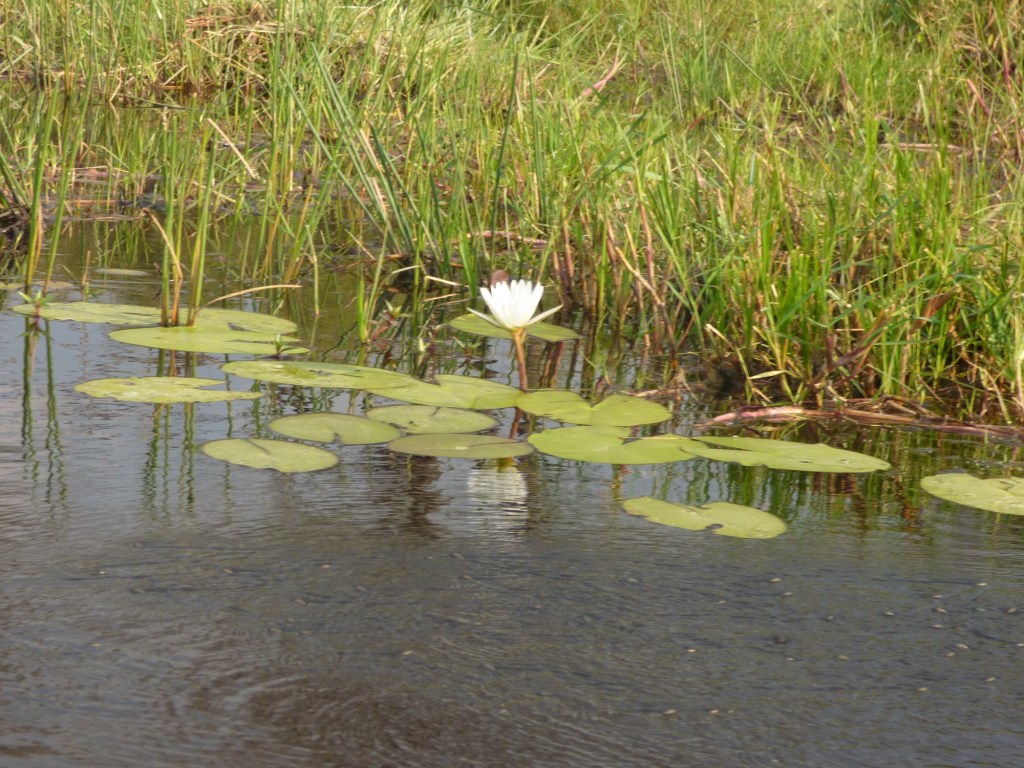
After wetting down my headband and shirt, and several minutes listening to the gentle rhythm of Punk’s voice and the gurgles of the rippling water, I began to settle. While both JD and I have been adjusting rather well to life on the road aboard Stevie, Nomad’s travel truck, the comparably serene conditions aboard Punk’s non-notarized canoe were a welcome respite.
We paddled for the next hour and a half, admiring the scenery and eventually stopping for a stretch break at our turn-around point, where Punk used a hippo skull as an interpretive aide to educate our group about hippos, crocodiles, and growing up as a villager in the Delta, with parents who spoke no English. He said he was proud of knowing our language, and being able to use it to make a living sharing his tribal ancestry and culture, his country’s history of colonization and independence, and changing relationships with the natural world.
While listening to Punk address our group, JD spied a herd of elephants approaching the water on the shore directly across from us. Bringing it to the attention of the other boatmen, Punk acknowledged that we were in an “elephant corridor” – a crossing frequently used by these gentle giants – as he directed us all to swiftly, but calmly and quietly, board the boats. Hearts beating with adrenaline, we pushed off from shore just as the herd of maybe 14 elephants began entering the water, perhaps 30-45 feet from the nearest boat.
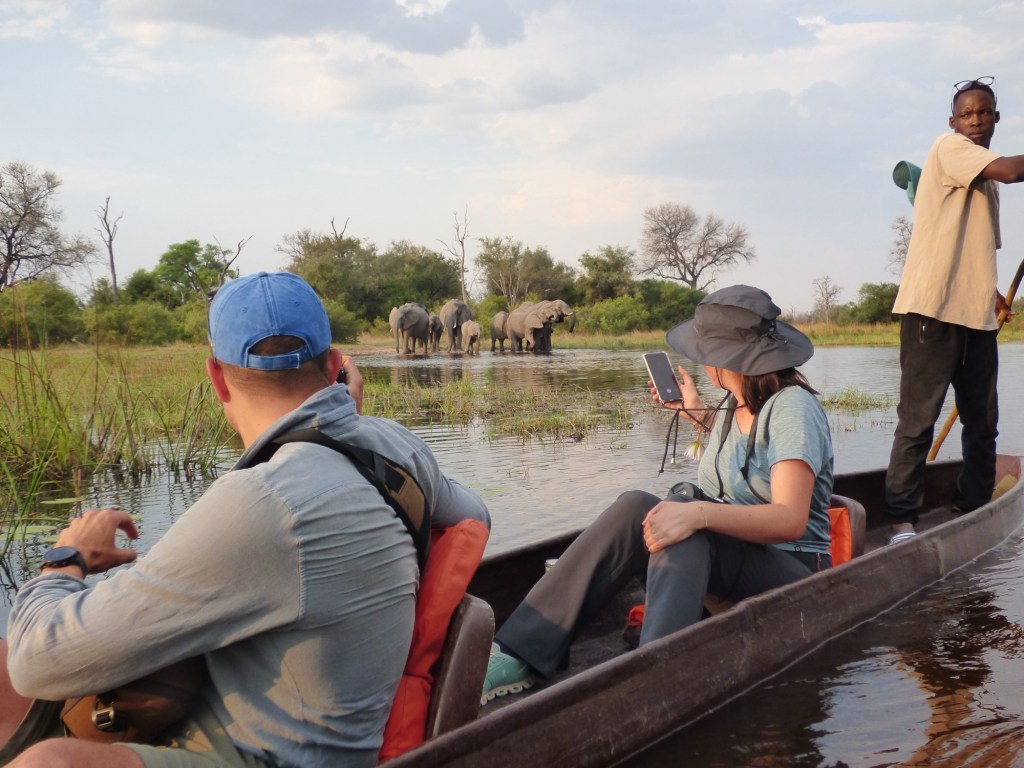
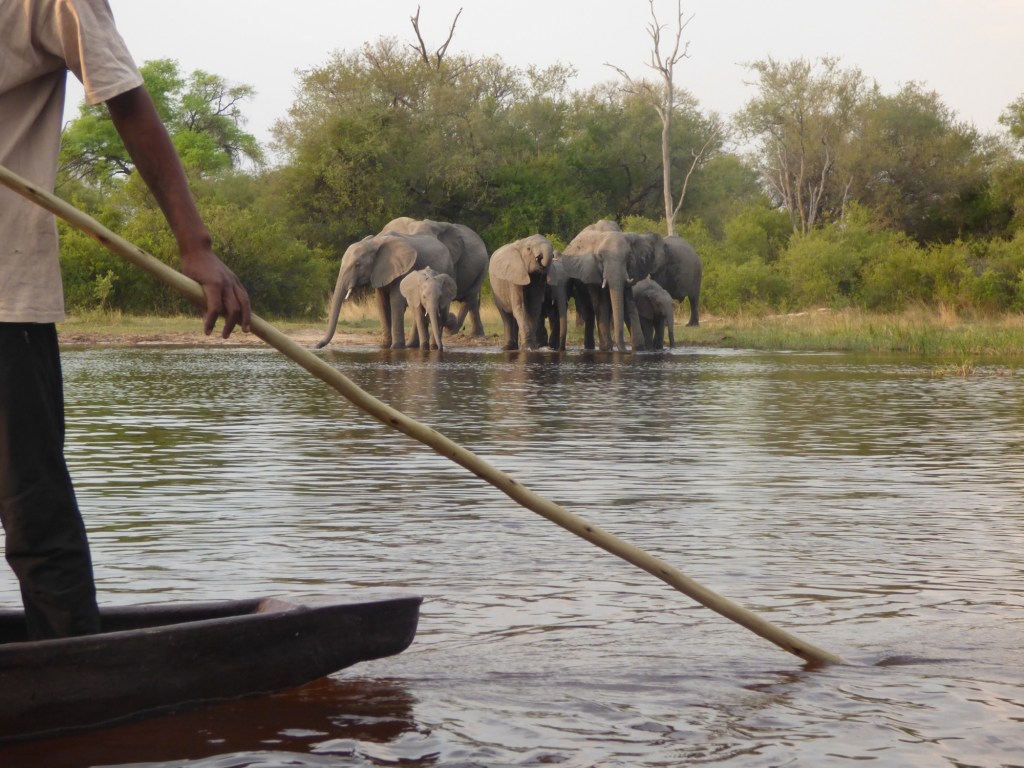
Although we had already seen thousands of elephants in Etosha National Park, all of us mesmerized by each and every one, this encounter was truly special. Being out of our vehicles, seated aboard dugout canoes, no engine noise anywhere, the separation between us felt minimal to non-existent. We could hear their giant footsteps as they trudged through the muddy water; their tusks as they brushed through the vegetation, curling with incredible precision around reeds and other grasses, the suction as they then ripped these plants up by the roots; the chomp of their teeth as they bit off leaves and stems from each clump full, dropping the muddy roots to the delta floor. Our group watched, silent and spellbound, for many, many minutes before our guides reluctantly, tenderly informed us that it was time to go.
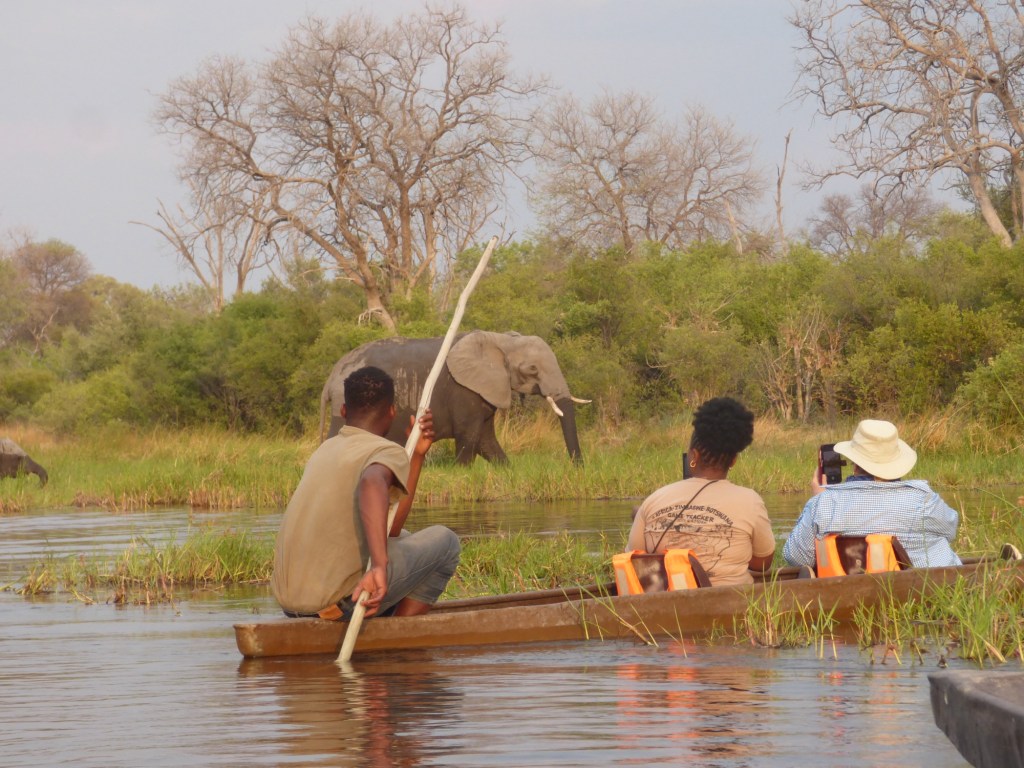
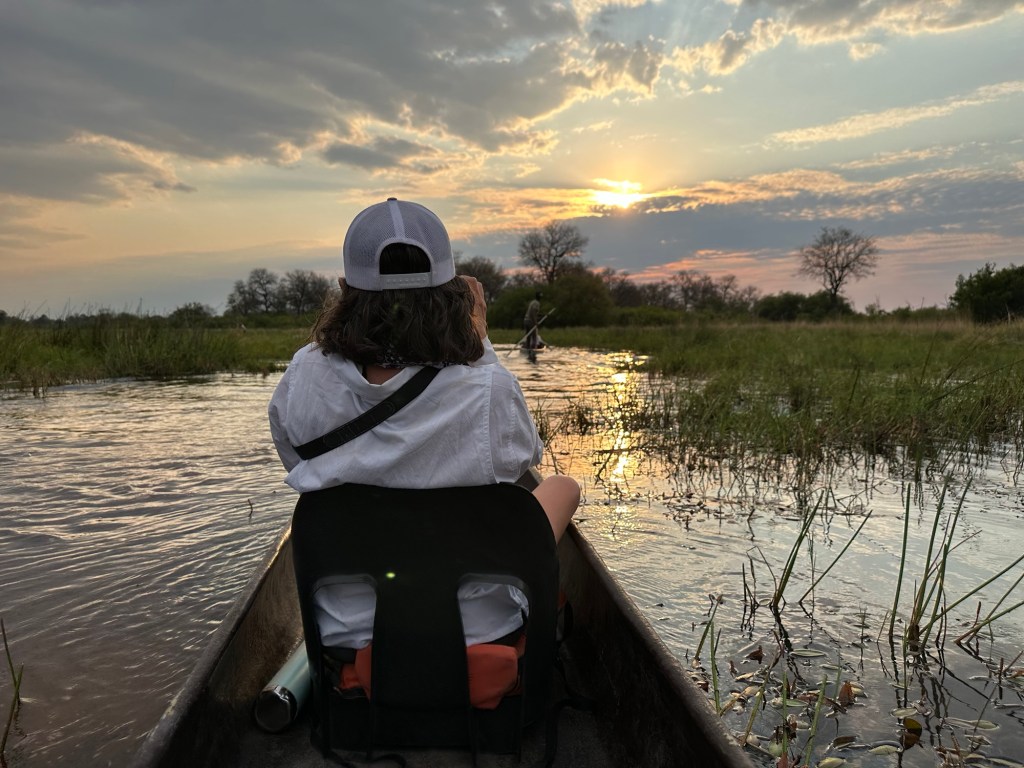
We paddled back to our vehicles amidst distant thunder and lightning, sun setting, as I brushed away tears of gratitude for all of the conditions that have allowed JD and me to come here, and experience this together. In particular I found myself thinking about my Dad, with whom I bonded as a child while pursuing his extensive collection of National Geographic magazines. Dad dreamt of traveling to places like this. He passed away last December, without ever doing so, But here I was, and am, carrying him and our shared love of travel and nature with me.

A short drive later, we arrived at our wilderness tent camp. The camp staff were standing out in a group waiting by the camp fire, singing, dancing, and ululating (my new favorite word – if you don’t know it, look it up!!) as they enthusiastically welcomed us in their native language, Setswana. Behind the staff and fire was a large open tent set up with long tables with place settings for 20, thoughtfully and tastefully adorned with vases of plants gathered from camp, illuminated by strings of hanging lights. Kerosene lanterns hung from short posts in front of each of our personal tents. It was beautiful, every last detail considered. And this was to be our home base for the next two days. More happy, grateful tears.
 If You’re Lucky Enough: Carolyn and JD’s blog
We continue to enjoy your safari. Glad you had such a good experience on the Okavango Delta. There was a recent incident in the same area that was not so pleasant. (See Incident with elephants Sept. 27, 2025).
On Tue, Oct 14, 2025 at 11:22 AM If You’re Lucky Enough: Carolyn and JD’s
LikeLiked by 1 person
We had not heard of that incident until you mentioned it. So harrowing!
LikeLike