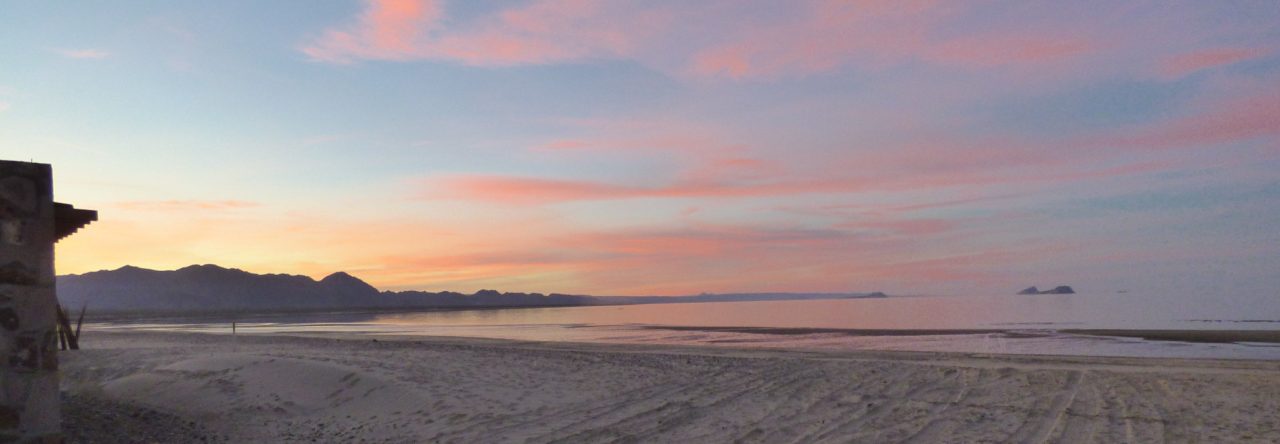
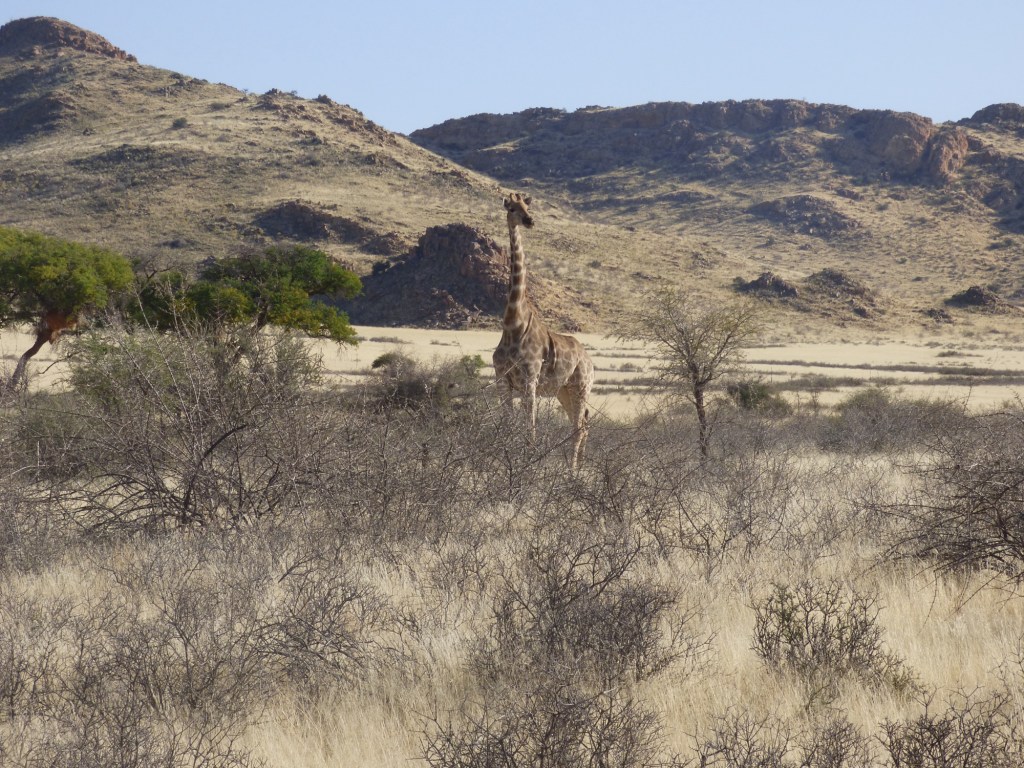
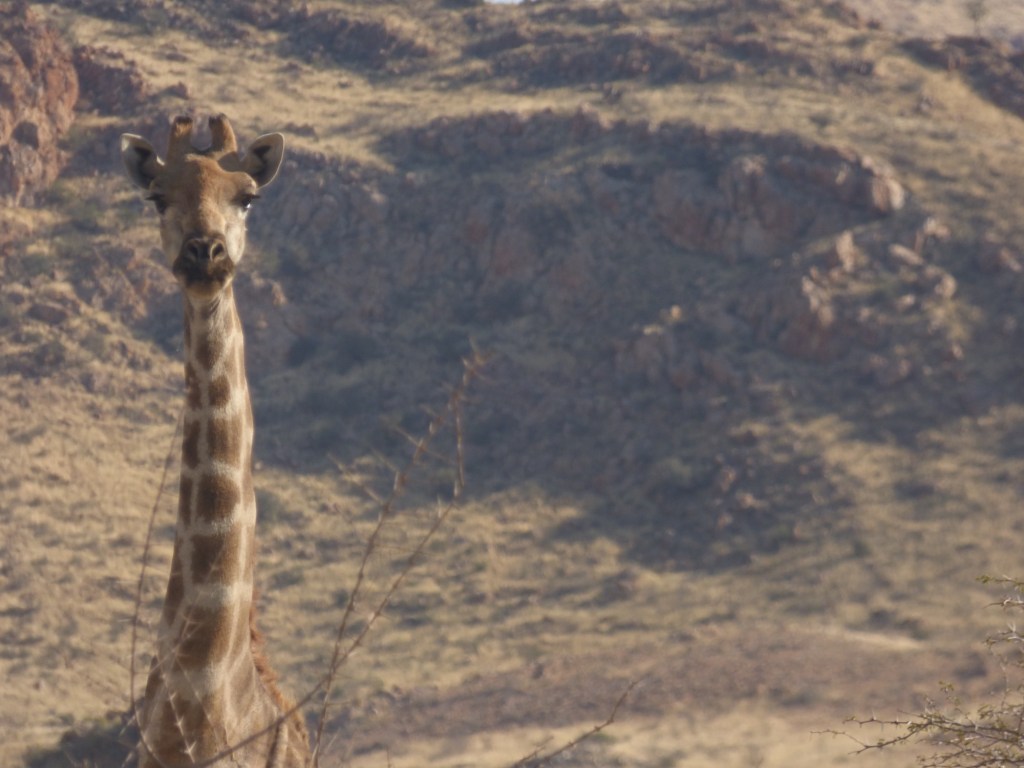
After our day-long tour of Sossusvlei Dunes, we got back to Hammerstein Lodge just in time to head out on a game drive into adjacent, privately-owned game reserves. A subset of our group of Nomads, 13 in total, loaded up into an open-air, 4×4 overland vehicle driven by Erasmus, our guide. A second similar, but smaller vehicle carrying other guests from the Lodge followed behind us. Within 10 minutes of entering the gates of the game reserve, we spotted a lone giraffe foraging in a small stand of acacia trees. Erasmus informed us that there are 17 giraffes in the reserve, and they are usually found on the back side of the mountain from our location – so we were lucky to spot this one. According to Erasmus, giraffes give birth standing up, newborns typically stand within 30 minutes of being born, and are running with their mothers within 10 hours of their birth.
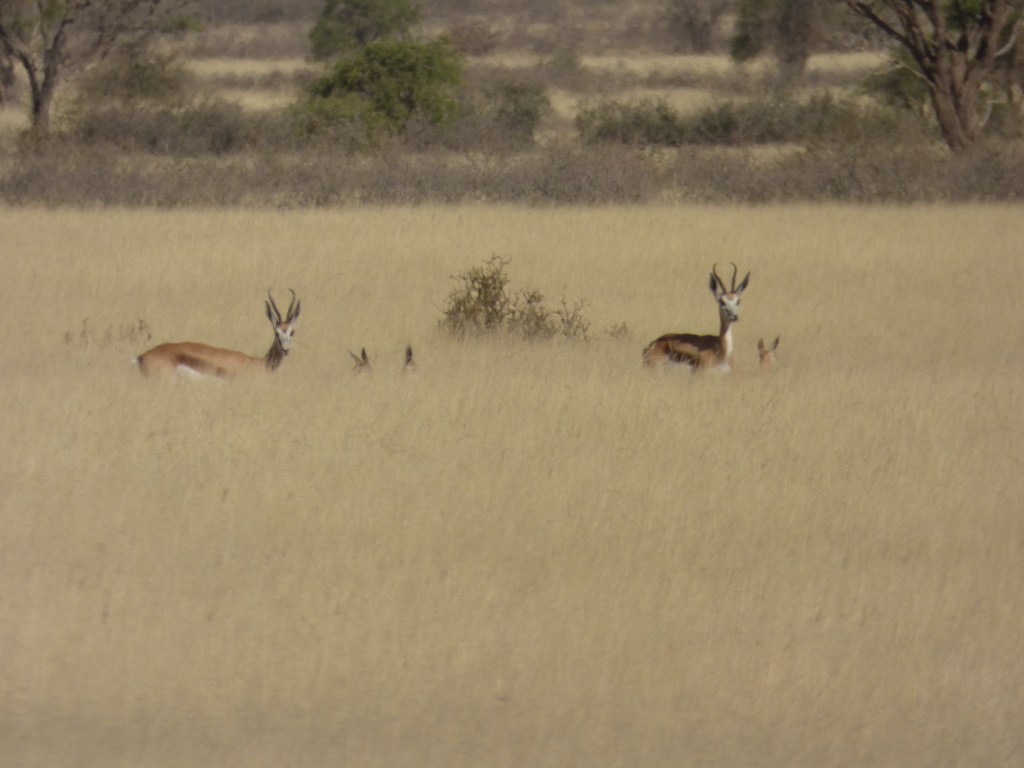
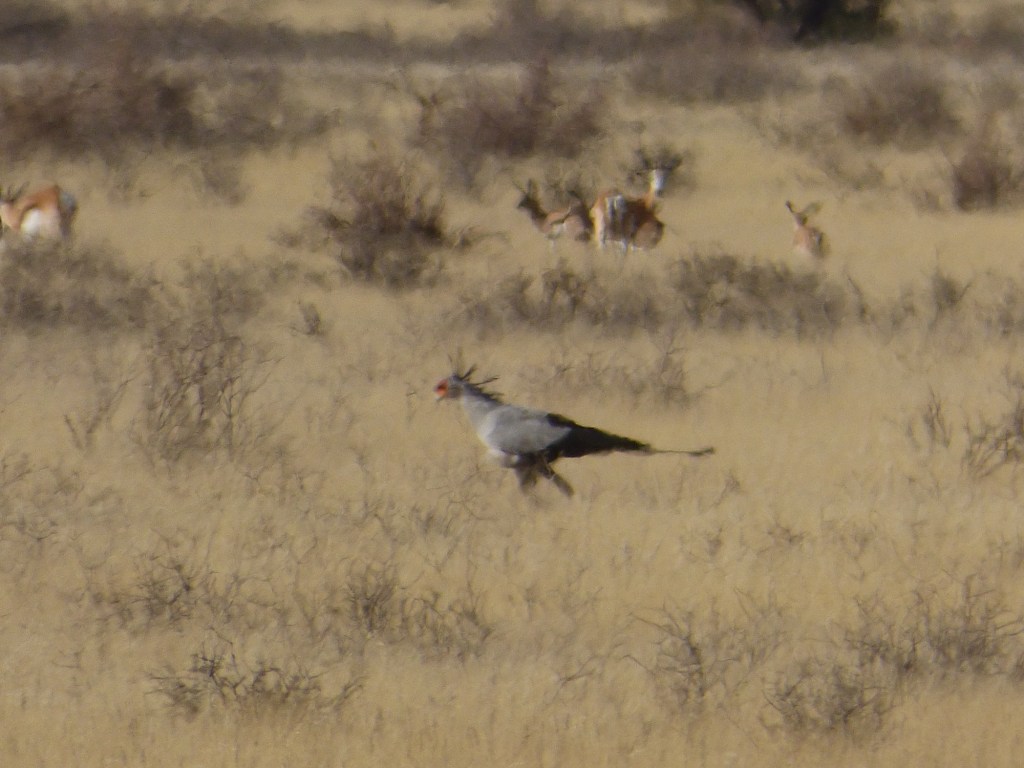
Continuing along our drive we saw a secretary bird (aka snake catcher), fox, more eland, and more oryx.

We then entered another gate into an adjacent, 5,000 hectare reserve dedicated to the protection of the white rhino. Once inside the gate, Erasmus gave us a safety briefing: the first group we were likely to see contains the sole bull of the reserve’s 7-rhino herd. As with many species, we should expect him to be protective, meaning we should not talk, or make noise of any kind. Erasmus told us that rhinos generally do not see well, or far – but their hearing and sense of smell is quite good. If he charges our vehicle, Erasmus insisted, do not scream, or jump out and run. Remain quiet, and calm.
Our group exchanged nervous laughter. Easy for him to say!
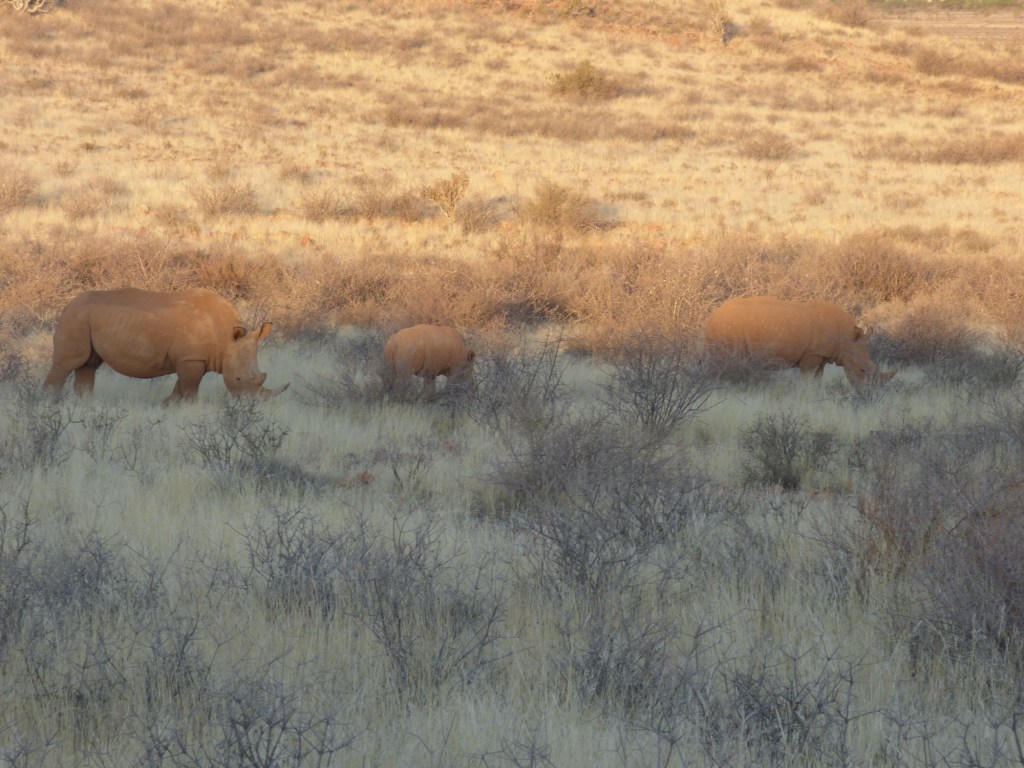
Within 10 minutes, we reached a group of four, consisting of a large bull, a mature female, a subadult, and a young rhino, 2-3 years old.
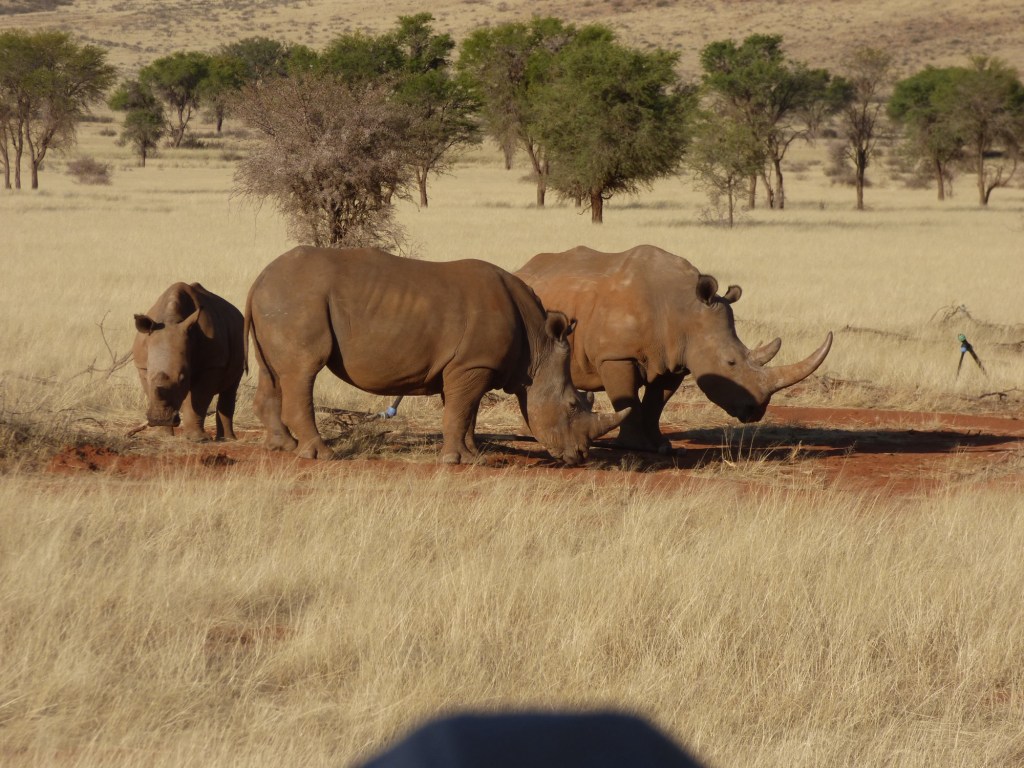
We watched them grazing, listening to their slow, labored breathing. Periodically they would raise their heads, and look in our direction – as if smelling or hearing us. The youngest rhino stayed close to its mother, who seemed to decide when to move, and in what direction – the rest of the group following her lead.
We watched for many spellbound minutes, as the group trekked away from us, moving along a familiar route to a nearby watering hole. Our group followed them at a distance, along a road that led behind a row of guest cabins to the main building of We Kebi Safari Lodge. As we parked, Erasmus assured us that we had the lodge’s permission to join its guests for a closer look. Following his instruction, we quietly rounded an outside corner of the main lodge building, and found ourselves out on a deck where the same group of rhinos was wallowing in and drinking from a watering hole strategically located within 30-40 feet of the deck’s edge. A strand of electric fence, just two feet off the ground, was all that stood between us and these massive icons of the Namibian desert.
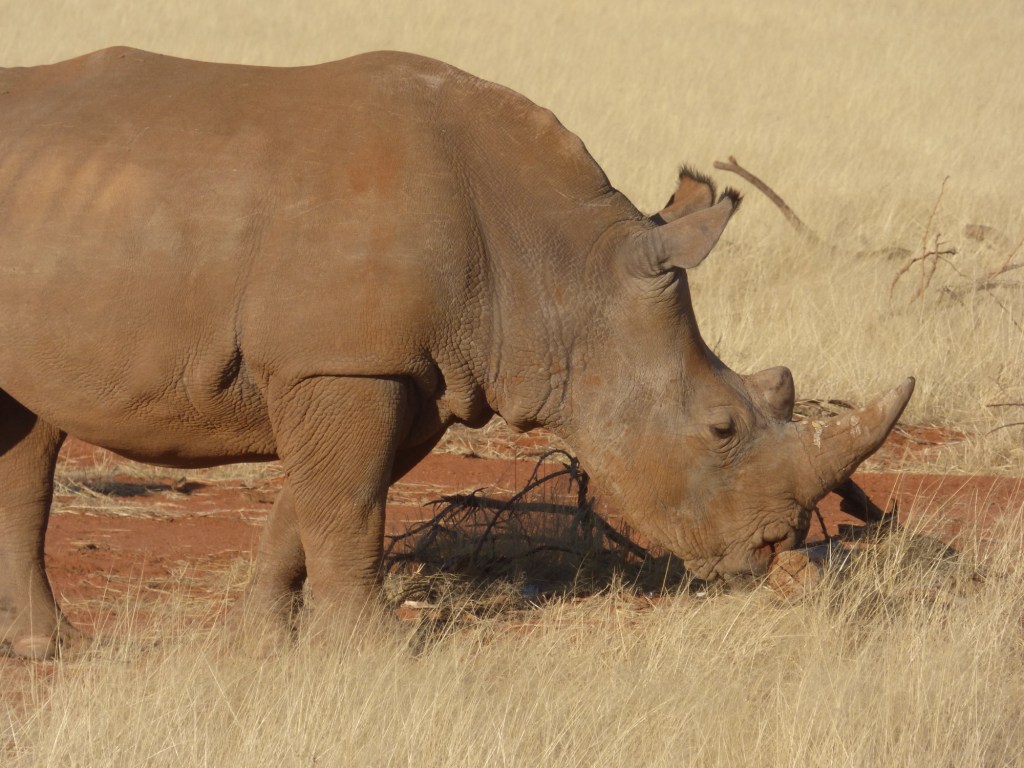
The bull walked closer to the deck, which was well shaded by a mature acacia tree, to graze right before our eyes. We stood watching, speechless. We could hear the sound of his breathing, as well as him grazing on the grass, just beyond our reach. While the scene had qualities of being staged and zoo-like, I found myself recalling the many diverse models of private-public conservation partnerships that I came to know while working for the U.S. Fish and Wildlife Service. Silently acknowledging the complexities and contradictions, I decided to focus on my gratitude that there are still white rhinos in the world, and people willing to work towards conserving them. And, for my – our – incredible privilege in being able to be among those to see and experience these animals, at all.
At some point I asked Erasmus why these were called “white” rhino. He said that the name originally was “wide” rhino, in reference to its facial features. But somewhere along the way someone misunderstood, and the new name stuck.
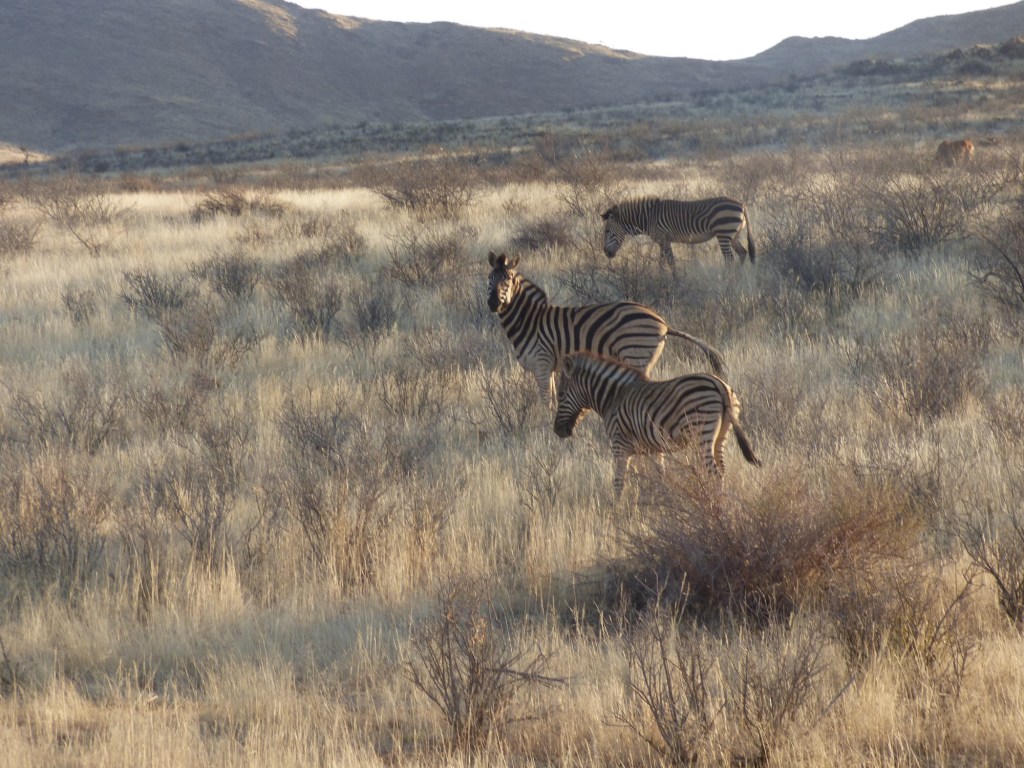
After a half an hour or so, our group left the main lodge in search of the last three of the seven white rhinos on the reserve. As we drove on, we encountered two kinds of zebras – Plains and Hartman’s Mountain zebras. The Plains zebra is rather uniform in color, primarily brown without any discernible stripes, whereas the Hartman’s zebra bears stripes.
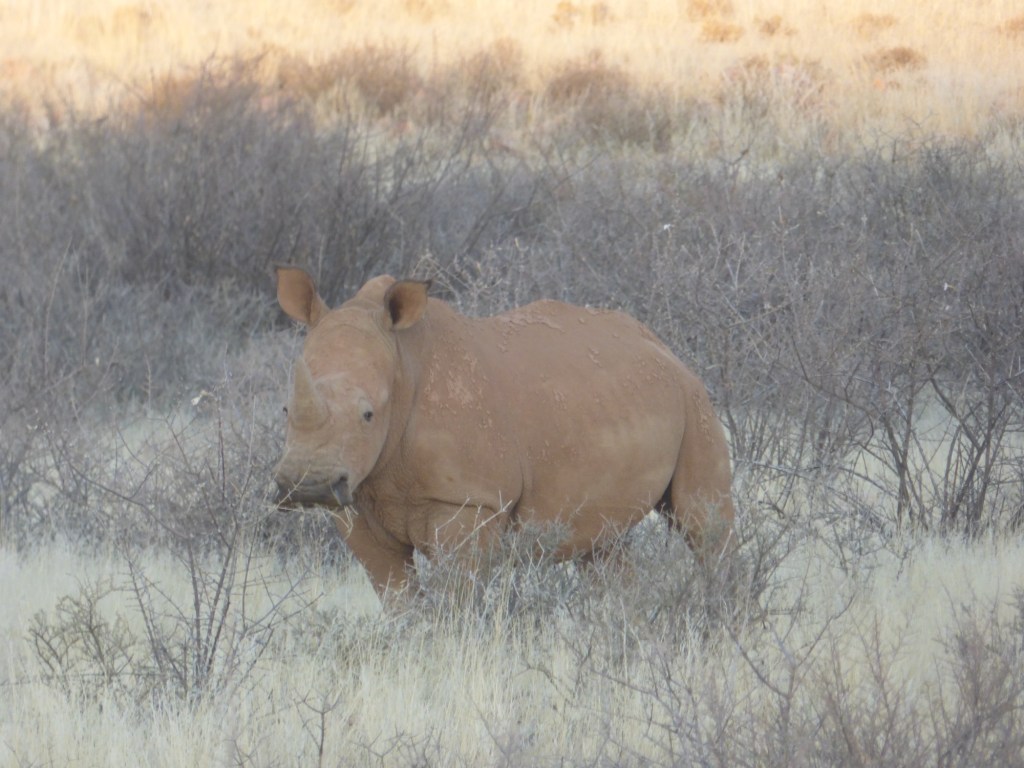
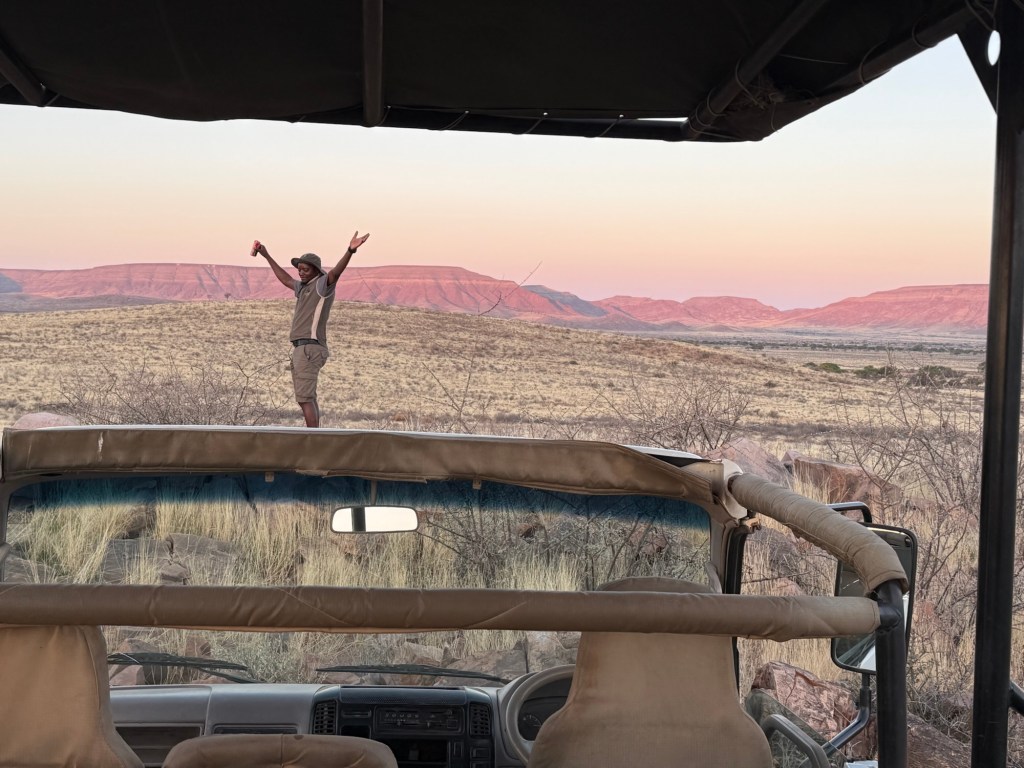
Eventually, we spotted two adults and a very small rhino, grazing at the crest of a nearby ridge, backlit by the sun that was beginning to set. Erasmus circled our vehicle widely around to the east, ultimately positioning us between the rhinos and the setting sun. We drove atop a slightly rocky, gentle knoll, and parked. Erasmus got out of the vehicle, and scouted over the top of the highest point, over the backside and just out of view of the knoll where we had parked, He returned, smiling, and invited us out of the vehicle. We looked cautiously at one another, and at him, wondering if we’d heard him right. But he persisted, beckoning us to join him.
We did, and within seconds of walking over the high point, found ourselves within 100 yards of two adults and a very young rhino, that Erasmus said was just five months old. They were beautifully cast in the amber light of the setting sun. We crept closer, eventually standing just under 100 feet away.
As we walked back to the truck, Erasmus and the guide and driver of the second vehicle pulled out coolers with ice cold drinks, arranging them into an improvised bar on the tailgate of our truck. Everyone was happy, smiling, laughing, and swapping impressions of our most unbelievable experience.
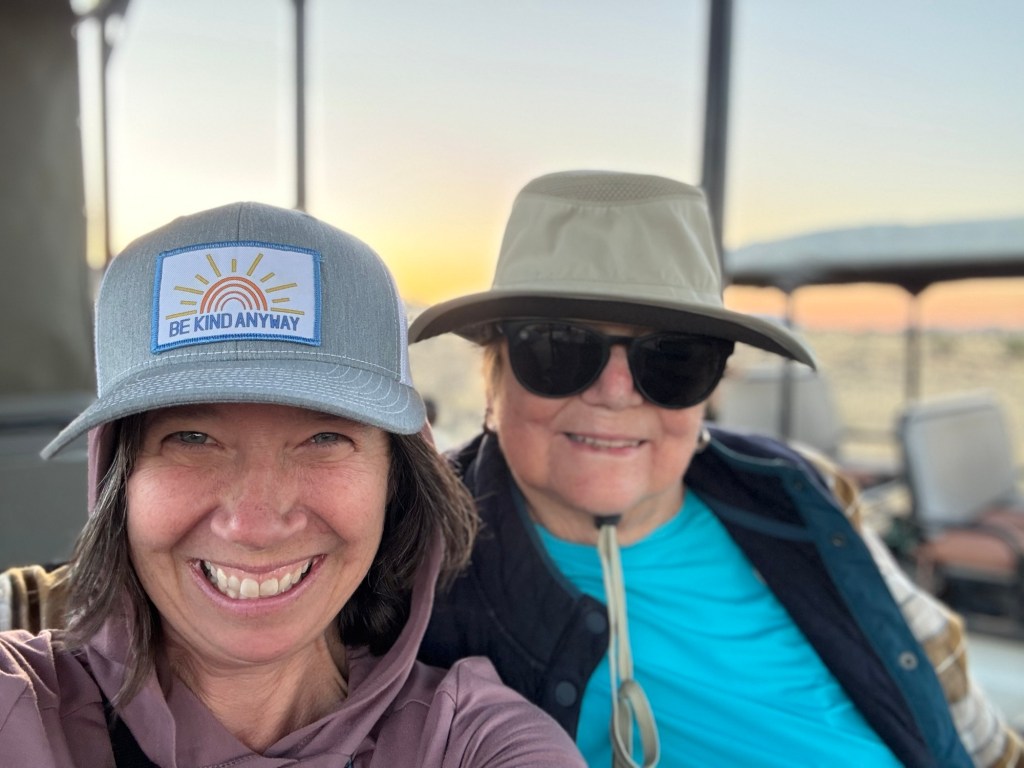
at sunset with the rhinos
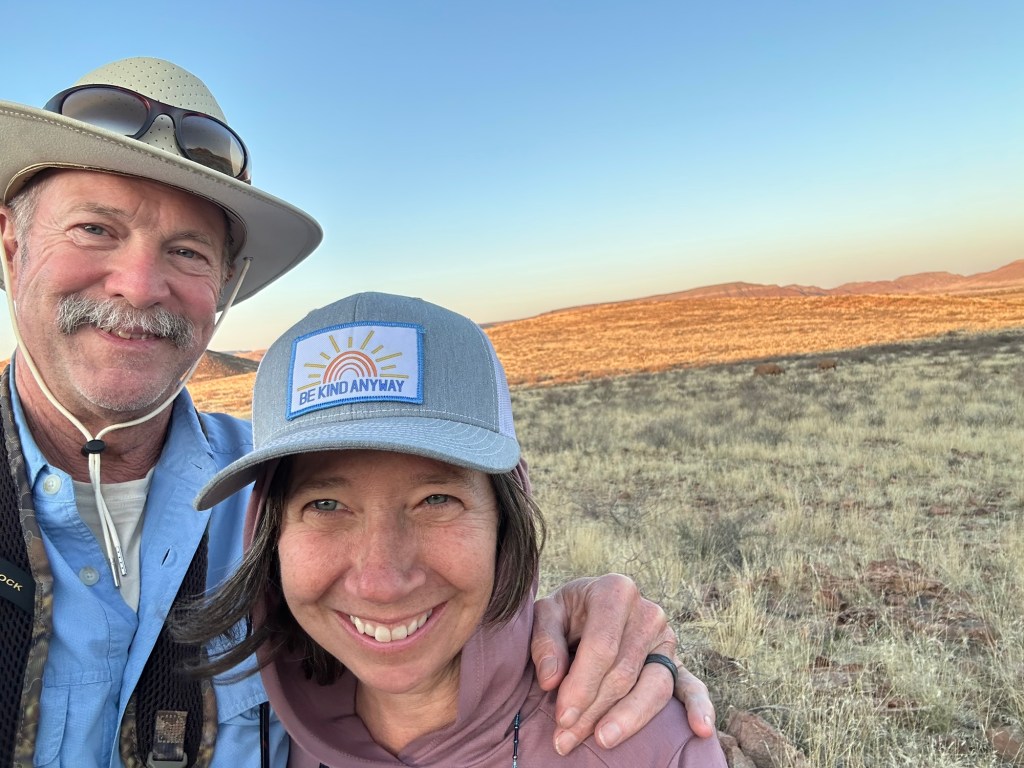
As we drove out of the reserve, JD and I continued to exchange incredulous glances toward one another, as if asking each other if this was really happening, if this evening could possibly get any better. The combination of gratitude, excitement, contentment and anticipation that I felt was glorious. Already, the trip was all we had hoped for, and so much more.
 If You’re Lucky Enough: Carolyn and JD’s blog
Thank you for sharing. I am,thrilled you are having this experience . Love you, Aunt Annie On Fri, Oct 3, 2025 at 6:10 PM If You’re Lucky Enough: Carolyn and JD’s
LikeLiked by 1 person
Aunt Annie, thank you for reading. It was a wonderful trip, I’m so grateful for the experience. I love you…
LikeLike
awesome!!!
LikeLiked by 1 person